

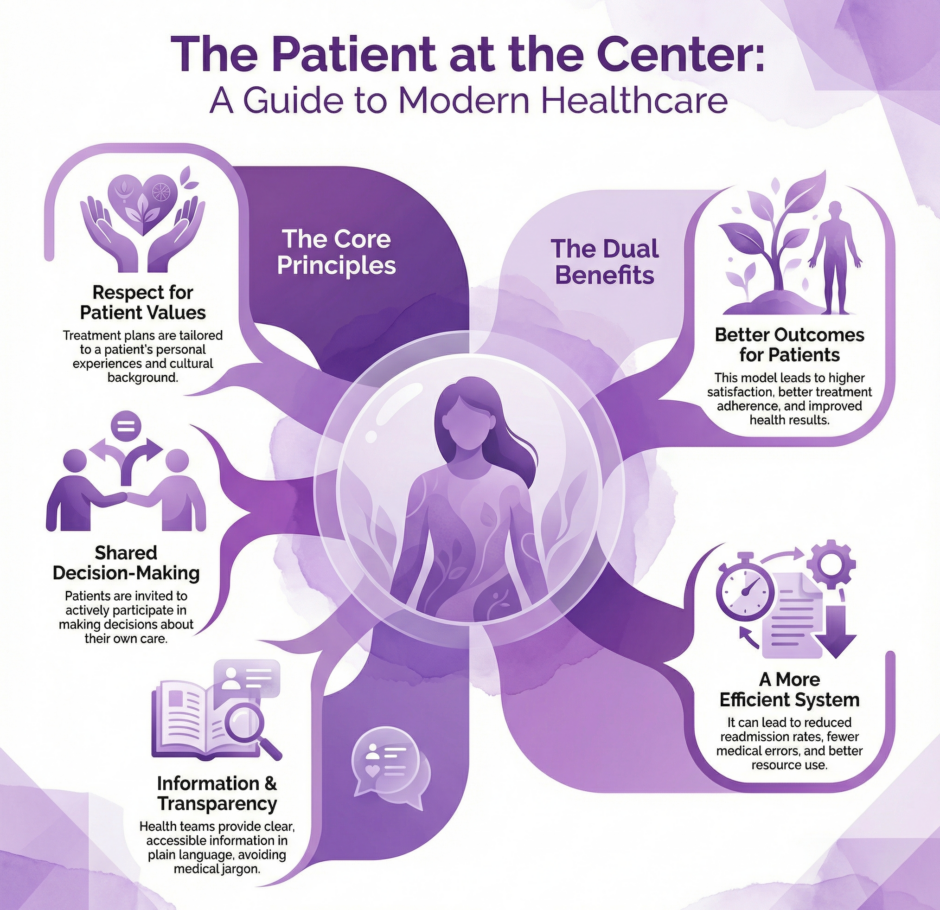
Patient-centered care models organize a practice around what the patient needs and wants, not just around the diagnosis in front of the provider. For most practices that sounds like good bedside manner. In practice it changes how visits are scheduled, how care is coordinated after the patient leaves, and which services the practice can bill for.
Key Takeaways
- Patient-centered care rests on four ideas
- Respect for the patient’s values and preferences
- Clear information about conditions and options
- Shared decisions about treatment
- Coordination across every provider involved
- The most common models are the patient-centered medical home, accountable care organizations and formal care management programs.
- Much of the coordination work is billable under CPT codes for chronic care management, transitional care management and related services.
- Those codes come with consent, time and documentation requirements that practices often miss.
What Makes Care Patient-Centered
The Institute of Medicine describes patient-centered care as care that respects and responds to individual patient preferences, needs and values, with those values guiding clinical decisions.
The older model ran the other way. The provider decided and the patient followed.
Under a patient-centered approach, the patient hears the options in plain language, weighs them with the care team and helps choose. Family members get involved when the patient wants them there. And when several providers are treating the same person, someone is responsible for making sure their plans don’t conflict.
Common Patient-Centered Care Models

There isn’t one patient-centered care model. Several structures put the idea into practice, and many practices use more than one.
The best known is the patient-centered medical home. A primary care practice takes responsibility for coordinating all of a patient’s care, including specialist visits, hospital stays and follow-up. NCQA runs the most widely used PCMH recognition program, and some payers pay more to recognized practices.
Accountable care organizations take the same idea across a whole network of providers. They share responsibility for the cost and quality of care for a defined group of patients. ACOs are one of several value-based care models that reward coordinated care.
Smaller practices often start with formal care management. A nurse or care manager checks in with patients who have chronic conditions between visits, reviews medications and makes sure referrals happen.
Collaborative care for behavioral health is another version. A primary care team works with a behavioral health care manager and a consulting psychiatrist so patients get mental health treatment without being sent somewhere else.
How Patient-Centered Care Gets Billed
This is the part that matters most to a practice’s revenue. A lot of the coordination work behind patient-centered care has its own CPT codes.
- Chronic care management covers non-face-to-face work for patients with two or more chronic conditions. Code 99490 covers the first 20 minutes of clinical staff time in a month, 99491 covers 30 minutes of the billing practitioner’s own time, and 99487 covers complex cases.
- Transitional care management covers the 30 days after a hospital or facility discharge. Code 99495 is for moderate complexity with a face-to-face visit within 14 days, and 99496 is for high complexity with a visit within 7 days.
- Advance care planning, billed with 99497, pays for time spent discussing a patient’s wishes for future care.
- Behavioral health integration, billed with 99484, covers care management for behavioral health conditions inside a primary care practice.
Each of these has rules attached. Chronic care management requires documented patient consent and a care plan, and Medicare patients owe cost-sharing on it, so they need to know that before they agree. Transitional care management requires an interactive contact with the patient within two business days of discharge. Miss the documentation and the claim gets denied, even though the work happened.
Where Value-Based Payment Comes In
Fee-for-service doesn’t pay much for a phone call that keeps a patient out of the emergency room. Value-based contracts do, at least indirectly, by rewarding outcomes and lower total cost.
That’s why patient-centered care and value-based care tend to show up together. One describes how care is delivered. The other describes how it’s paid for.
What Gets in the Way

Time is the biggest obstacle. A 15-minute visit leaves little room for shared decision-making, and between-visit coordination needs staff who aren’t already booked solid.
Documentation is the second. Care management codes are time-based, so the practice has to track minutes and keep a care plan current. Many practices do the work and never bill it because nobody set up the tracking.
Some providers also push back on the change itself, especially those trained when the provider made the call and the patient went along.
Measuring Whether It’s Working
Patient experience surveys are the most direct measure. Medicare and many commercial payers use CAHPS surveys, which ask patients whether providers explained things clearly, listened and involved them in decisions.
Clinical measures matter too, including readmission rates, control of chronic conditions and how many patients follow their care plans. Technology helps on both fronts, and AI-powered tools are starting to flag patients who need outreach before a problem turns into a hospital visit.
Patient-Centered Care Models FAQ
What is a patient-centered care model?
It’s a way of organizing care around the patient’s needs, preferences and values, with the patient taking part in decisions and the care team coordinating across providers.
What are examples of patient-centered care models?
The most common are the patient-centered medical home, accountable care organizations, chronic care management programs and collaborative care for behavioral health.
What is the difference between patient-centered care and value-based care?
Patient-centered care describes how care is delivered. Value-based care describes how providers are paid, based on outcomes and cost instead of visit volume. The two often work together.
Can practices bill for care coordination?
Yes. Chronic care management, transitional care management, advance care planning and behavioral health integration all have CPT codes, each with its own time, consent and documentation requirements.
What is a patient-centered medical home?
It’s a primary care practice that takes responsibility for coordinating all of a patient’s care. NCQA offers the most widely used recognition program for it.
Getting Patient-Centered Work Paid With Medwave
Care coordination only pays when the claims are built right. Medwave’s medical billing team handles care management and transitional care claims, and checks that the consent, time and documentation behind each one will hold up before it goes out.
If your team already makes these calls and isn’t billing for them, that’s the place to start.

Co-Founder and COO of Medwave, bringing more than 30 years of hands-on experience in healthcare revenue cycle management, payer contracting, and medical credentialing.