

Provider recredentialing is the periodic review in which each payer or hospital re-verifies your license, board certification, and work history to keep you in network.
Most providers meet it as a letter or an email with a deadline attached. Miss that deadline and the payer can terminate your participation, which stops in-network payment even though you are still seeing patients. The rest of this page covers what the clocks are, what gets checked, and how to keep every panel active.
Key Takeaways
- Payers following NCQA standards recredential a provider at least every 36 months, measured from the last approval date.
- Your CAQH profile needs a fresh attestation every 120 days, which is a separate clock from payer recredentialing.
- Medicare revalidation is a third process and generally runs on a five-year cycle.
- Starting 90 to 120 days before a deadline leaves room to fix expired documents before they cause a lapse.
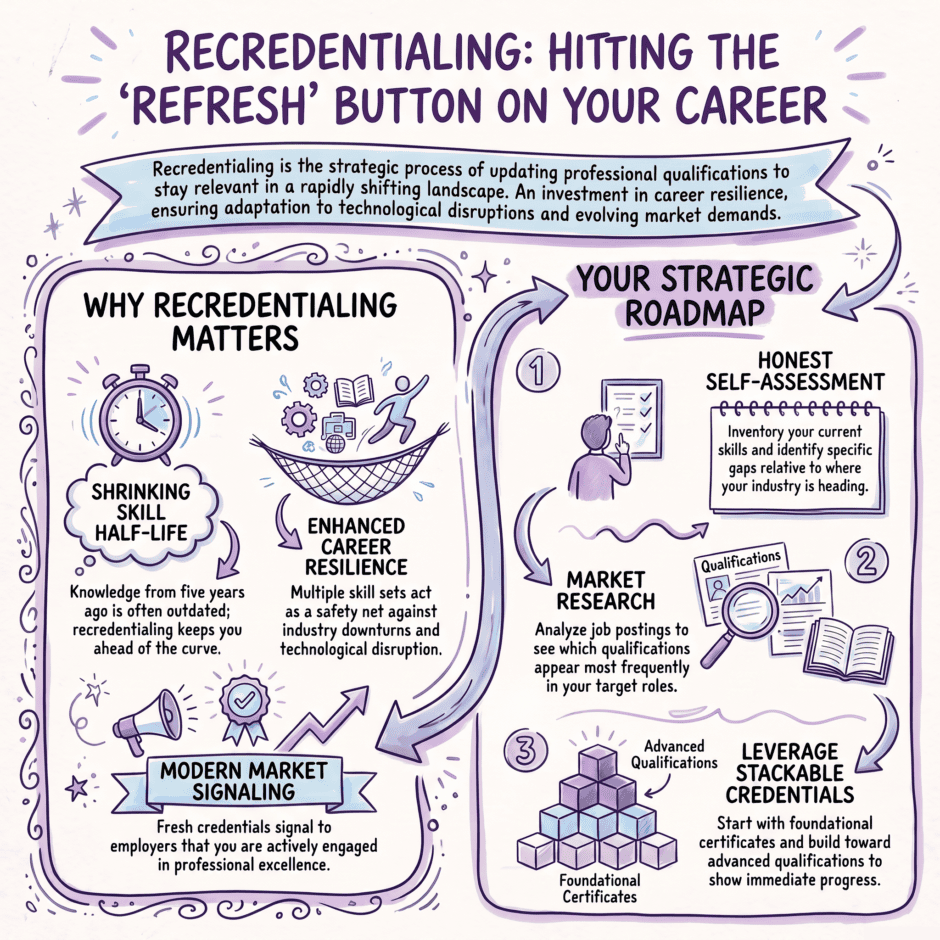
What Is Provider Recredentialing?

Recredentialing repeats the verification a payer did when it first approved you. The payer checks your credentials against primary sources again, looks at your recent history, and decides whether you stay in its network for another cycle. Each payer runs its own clock, so a provider on five panels has five recredentialing dates.
It sits next to two other processes that get confused with it. Our post on revalidation versus recredentialing breaks down how Medicare’s enrollment renewal differs from the private payer review, and our guide to staying credentialed walks through the provider side step by step.
The Deadlines Providers Have to Track
Four different clocks run at the same time, and they do not line up with each other.
- Payer recredentialing happens at least every 36 months under NCQA standards, and the work should start 90 to 120 days ahead.
- CAQH reattestation is due every 120 days, and an expired profile can hold up every payer that pulls from it.
- Medicare revalidation generally comes every five years, or every three years for DMEPOS suppliers, and CMS can request one off cycle.
- Licenses, DEA registrations, and board certifications renew on their own schedules, and an expired one will stall a recredentialing file.
The NCQA standards are the source of the 36-month rule, and CAQH is where most of the paperwork lives. You reattest through CAQH ProView, and Medicare revalidation runs through the CMS page for renewing your enrollment.
What Payers Re-Verify
Payers go back to the original source for each item, so what you submitted last time does not carry over. Expect them to confirm your state license, DEA registration, board certification, malpractice coverage and claims history, and any sanctions or exclusions. They also look at your work history since the last cycle and any complaints or quality concerns on file.
Gaps and changes draw the most questions. A new practice location, a lapsed certification, or an unexplained break in work history can turn a routine renewal into a request for more documents.
What Happens When a Deadline Is Missed

The damage shows up in billing before anyone notices the cause. A provider whose recredentialing lapses can be dropped from the panel, and claims for visits after that date start coming back denied. We describe how this plays out in the ghost provider problem, where a lapsed CAQH profile quietly takes a busy provider out of network.
Getting back in is slower than staying in. Reinstatement often means a fresh application, and the gap in payment during that time is rarely recovered. Our list of the most common reasons for credentialing denials shows which small mistakes cause most of these delays.
How to Stay Ahead of Every Renewal
Keep one master list of every payer, the last approval date for each, and the date the next review is due. Set reminders 120 days out so there is time to collect documents, and put the CAQH reattestation on its own recurring reminder.
Check expiration dates on your license, DEA registration, and board certification before the payer asks. Keep a current CV with explanations for any gaps, and send changes of address or practice location to payers as they happen. Answer every payer request quickly, because a missing reply is one of the easiest ways to stall a file.
When to Hand Recredentialing to a Specialist

The work is repetitive and deadline-driven, and it multiplies with every payer and every provider you add. Practices often hand it off once tracking the dates starts taking staff time away from patients or after the first lapse costs them a month of payments.
Medwave has supported 15,000+ providers, and recredentialing is part of our medical credentialing service. We gather the required documents from you first, submit complete files to each payer, and follow every application until it is approved. If you also want help with fee schedules at renewal time, our payer contracting team can review your rates at the same time.
How often does a provider have to be recredentialed?
Payers following NCQA standards recredential at least every 36 months. Each payer sets its own date, so a provider on several panels will have several different deadlines.
Is recredentialing the same as Medicare revalidation?
No. Recredentialing is the private payer or hospital review, and revalidation is Medicare’s enrollment renewal, which generally comes every five years.
How often do I need to reattest in CAQH?
Every 120 days. An expired attestation can stall recredentialing with every payer that pulls your profile.
What happens if I miss a recredentialing deadline?
The payer can terminate your participation, and claims for services after that date may be denied until you are reinstated.
When should I start the recredentialing process?
Plan on 90 to 120 days before the deadline. That window is enough to replace expired documents and answer payer questions without a lapse.
Never Chase a Recredentialing Date Again
Send us your payer list and the approval dates you have on file, and we will build the renewal calendar and start the paperwork before the first deadline arrives.