

Forensic pathology sits at the intersection of medicine, law, and public health. It’s a specialty that demands extraordinary clinical expertise, operates under intense legal scrutiny, and runs on a billing model that most revenue cycle professionals have never encountered. For that reason, it’s also one of the most administratively underserved specialties in healthcare.
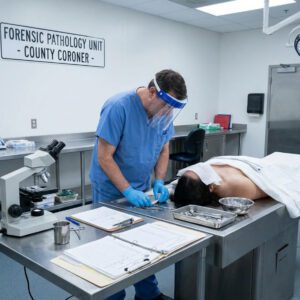 The practices and medical examiner offices that get billing and credentialing right don’t just collect more revenue. They spend less time dealing with denials, maintain their enrollment standing with payers and contracting agencies, and avoid the slow revenue erosion that comes from contracts that haven’t been renegotiated in years. The ones that don’t get it right often don’t realize how much they’re losing until someone actually runs the numbers.
We take a look at how forensic pathology billing differs from standard medical billing, who pays for these services and how, which CPT codes apply and when, what the credentialing process looks like for forensic pathologists, and where the most common and costly billing mistakes occur. At Medwave, we handle billing, credentialing, and payer contracting for specialty practices across the country, and the guidance here reflects what actually works in this specialty.
Key Takeaways
- Forensic pathology billing involves multiple revenue streams simultaneously, including government contracts, insurance billing, and direct billing to legal entities, each with different rules.
- A significant portion of forensic pathology work is funded through government contracts rather than traditional insurance, which requires a completely different administrative approach.
- CPT codes 88000 through 88099 cover autopsy services, but commercial insurance coverage for autopsies is limited and varies significantly by payer.
- Forensic pathologists billing insurance need to be enrolled with Medicare, Medicaid, and commercial payers, a process that takes 60 to 150 days depending on the payer.
- Government contract underpayment is a chronic problem in this specialty, often because contracts haven’t been renegotiated in years.
- Medwave handles billing, credentialing, and payer contracting for forensic pathology practices and medical examiner offices nationwide.
What Makes Forensic Pathology Billing Different
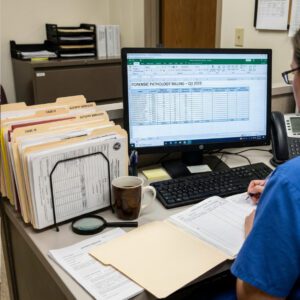 Most medical specialties follow a familiar billing pattern. A patient comes in, receives a service, insurance is billed, and payment follows. Forensic pathology breaks almost every assumption that pattern is built on.
In many forensic cases, there is no living patient. There is no insurance card to collect, no eligibility to verify, and no patient authorization to obtain. The work is performed for legal, investigative, or public health purposes rather than for direct patient care, which means the funding source isn’t a health insurance company at all. It might be a county government, a law enforcement agency, a private attorney, or a family that hired an independent forensic pathologist to review a death that raised questions.
That’s what makes forensic pathology billing genuinely different from almost anything else in the specialty billing world. The revenue comes from multiple sources simultaneously, and each source has its own documentation requirements, invoicing protocols, and payment timelines. A practice that manages all of this well can run a financially healthy operation. One that handles it inconsistently or ignores one revenue stream entirely leaves money on the table every single month.
There’s also the legal dimension. Forensic pathologists frequently provide expert testimony, independent case reviews, and consultation services to law firms and legal entities. Those services are almost never covered by insurance and must be billed directly. Mixing those claims into an insurance billing workflow is one of the fastest ways to generate a pile of denials that didn’t need to happen.
Who Pays for Forensic Pathology Services?
Knowing who pays for a given service before the work is performed is the foundation of billing correctly in this specialty. The answer varies significantly depending on what the service was, in what setting it was provided, and for what purpose.
The primary payer categories in forensic pathology are:
- Government and public agency contracts
County coroner offices, state medical examiner offices, and municipalities that retain private forensic pathologists to perform death investigation services under a fixed-fee or per-case contract arrangement - Commercial insurance
Applicable when a forensic pathologist provides consultation services for a living patient in a hospital or clinical setting, where standard insurance billing rules apply - Legal and law enforcement entities
Attorneys, law firms, insurance companies with legal claims, and investigative agencies that retain forensic pathologists for expert consultation, independent case review, or testimony preparation - Federal payers
Medicare and Medicaid may apply in limited circumstances where forensic pathologists provide consultation services for living patients - Private and self-pay clients
Families or individuals who engage a forensic pathologist directly for a private autopsy, a second opinion on a cause of death determination, or an independent review of a case
Each of these categories requires a different billing approach, different documentation, and different follow-up processes when payment is delayed or disputed. A practice that treats all of them the same way will consistently underperform across most of them.
How Forensic Pathology CPT Codes Work
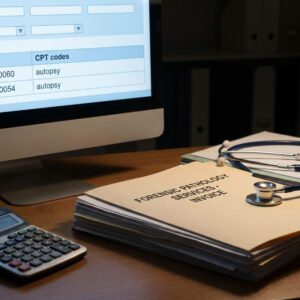 CPT coding in forensic pathology is specific, and getting it right directly affects how much revenue the practice collects on billable cases. The core autopsy codes run from 88000 through 88099, and the level selected depends on the scope of the examination performed.
88000 covers a gross examination only, without brain examination. 88005 adds brain examination to the gross exam. 88007 includes gross examination with brain and spinal cord. 88012 covers an infant autopsy with brain examination. As the scope of the examination expands to include microscopic examination of specimens, the applicable codes move higher in the range, with add-on codes for microscopic examination applying on top of the base autopsy code. Capturing those add-on codes correctly is important. Forensic pathologists who routinely perform microscopic examination but don’t bill the associated add-on codes are consistently undercollecting on every case where that work was done.
For forensic pathologists who work in hospital-based or clinical settings and examine tissue specimens, the surgical pathology codes from 88300 through 88309 apply. These are tiered by the complexity of the specimen examined, and level selection should reflect the work actually performed and documented.
Commercial insurance coverage for autopsy services is limited. Most standard insurance policies exclude autopsies as a covered benefit, which means billing autopsy codes to commercial payers in most circumstances will result in a denial. There are exceptions, including some policies that cover autopsies under specific conditions, but those are not the norm. Knowing which payers in your specific mix cover autopsy services and which don’t is essential before claims go out the door.
Expert witness services, independent case reviews performed for legal clients, and deposition preparation are not covered by insurance and should never be submitted as insurance claims. These services are billed directly to the retaining attorney or firm at an agreed rate. Routing them through an insurance billing workflow wastes time and generates denials that are entirely avoidable.
Government Contracts vs. Insurance Billing: Managing Both Revenue Streams
Many forensic pathology practices operate two distinct revenue streams at the same time. Government contract revenue and insurance billing revenue have almost nothing in common from an administrative standpoint, and they need to be managed separately with separate workflows, tracking systems, and staff knowledge.
Government contract revenue is typically structured as a fixed annual fee or a per-case rate negotiated with the contracting agency. Payment doesn’t depend on CPT coding or insurance claims submission. It depends on accurate invoicing, timely report submission, and meeting the documentation standards spelled out in the contract. These contracts often have specific invoicing windows, and missing them delays payment in ways that add up over the course of a year.
Contract underpayment is one of the most common and most overlooked revenue problems in forensic pathology. Many practices are operating under contract terms that were set five or ten years ago and have never been renegotiated. Costs have gone up. Staffing costs have gone up. The per-case or annual rate in the contract has not. Unless someone is actively reviewing and renegotiating those agreements on a regular cycle, the practice is absorbing that gap as a permanent loss.
Insurance billing applies when a forensic pathologist provides services in a clinical or hospital-based context for a living patient. In those cases, standard payer enrollment, CPT coding, and claims submission rules apply. The documentation requirements are different from forensic casework, the billing timelines are different, and the follow-up process for denials or underpayments is different. Running both streams through the same administrative process without recognizing those differences leads to errors in both.
Forensic Pathology Credentialing: What the Process Involves
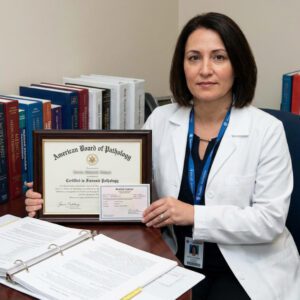 Credentialing for forensic pathologists has two distinct dimensions depending on the practice setting. Pathologists who work in a hospital-based environment need hospital medical staff credentialing. Those who bill insurance need payer enrollment. Many need both, and the timelines for each run independently.
Hospital credentialing for forensic pathologists follows the standard medical staff process: application submission, primary source verification of medical education, residency, fellowship, board certification, and licensure, peer references, department chair review, medical executive committee approval, and board sign-off. Most facilities complete this process in 60 to 120 days under normal circumstances. Some take longer. A pathologist who cannot begin working because credentialing is still in process represents a direct and measurable cost to the practice every day the delay continues.
Board certification through the American Board of Pathology in forensic pathology is the standard credential required in this specialty. Most hospital systems, government contracting agencies, and payers that credential forensic pathologists will require it. Maintaining that certification, including meeting continuing education requirements and re-examination timelines, is part of the ongoing credentialing maintenance every forensic pathologist needs to manage.
State medical licensure is required in every state where the pathologist practices. For forensic pathologists who work across multiple jurisdictions, maintaining active, unrestricted licenses in each state is a baseline requirement. License expiration in any state where active cases are pending creates immediate compliance and billing problems.
Payer enrollment applies when the forensic pathologist bills Medicare, Medicaid, or commercial insurance for consultation or clinical services. CAQH ProView centralizes much of the data collection for commercial payer enrollment. Medicare enrollment runs through CMS PECOS. Each payer has its own timeline, and enrollment gaps during active billing periods can result in claims that cannot be collected retroactively.
Common Billing Errors in Forensic Pathology
The billing errors that cost forensic pathology practices the most revenue tend to fall into predictable categories. Most are avoidable with the right processes in place.
- Billing autopsy CPT codes to commercial payers that exclude autopsy coverage, generating automatic denials on cases that should have been billed through a different channel or not billed to insurance at all
- Failing to capture microscopic examination add-on codes alongside base autopsy codes, leaving legitimate and documented work uncompensated
- Missing government contract invoicing windows because there are no clear tracking systems or internal deadlines tied to the contract terms
- Routing expert witness and legal consultation services through insurance billing instead of direct billing to the retaining attorney or agency
- Undercoding surgical pathology specimens examined as part of forensic casework, consistently selecting lower-tier codes than the work performed supports
- Not tracking license expiration dates across multiple states, which leads to credentialing gaps that affect both hospital privileges and payer enrollment standing
- Failing to renegotiate government contracts on a regular cycle, allowing per-case or annual rates to fall further and further behind actual operating costs
- Billing under the wrong NPI when group and individual provider NPIs are not correctly assigned across different service types and payer categories
Any one of these errors, occurring consistently across months of casework, produces revenue losses that compound over time. The fix for most of them isn’t expensive. It’s process discipline and staff training.
Denial Management in Forensic Pathology
 Denial patterns in forensic pathology are different from most other specialties. A large share of denials in this field are structural, meaning they happen because the wrong service was billed to the wrong payer, not because the documentation was weak or the code was wrong. That distinction matters because the solution is different.
Billing autopsy codes to commercial payers that exclude autopsies will always produce a denial. That’s not a documentation problem. It’s a workflow problem that should have been caught before the claim went out. Pre-billing payer verification, checking each payer’s coverage policy for the specific service type before submission, eliminates a significant category of predictable denials in forensic pathology.
For consultation services billed to insurance, medical necessity denials are the most common challenge. These require clinical documentation that clearly supports the need for the consultation, the findings of the examination, and the clinical judgment applied. A forensic pathologist’s report written for legal purposes may not contain the specific language a payer’s medical necessity review looks for, and adapting documentation for clinical billing purposes is a skill that not every forensic pathologist has developed.
Government contract disputes don’t go through an insurance appeals process. They require direct communication with the contracting agency, reference to the specific contract terms, and in some cases formal dispute resolution under the contract’s governing provisions. Having those contract terms clearly documented and accessible is essential when a payment dispute arises.
Forensic Pathology Billing, Credentialing FAQ
Does insurance cover forensic autopsies?
Generally, no. Most commercial insurance policies exclude autopsy services as a standard benefit. Coverage exceptions exist in some policies under specific circumstances, but they are not common. Forensic autopsies performed for investigative or legal purposes are typically funded through government contracts or billed directly to the retaining agency rather than submitted to commercial insurance.
What CPT codes are used for autopsy billing?
The primary autopsy CPT codes run from 88000 through 88099. The specific code selected depends on the scope of the examination, including whether brain examination, spinal cord examination, or microscopic examination of specimens was performed. Add-on codes for microscopic examination apply on top of the base autopsy code and should be captured whenever that work is performed and documented.
How does a forensic pathologist get credentialed?
Credentialing for forensic pathologists involves two parallel tracks. Hospital credentialing, for those working in a hospital-based setting, follows the standard medical staff application and verification process. Payer enrollment, for those billing Medicare, Medicaid, or commercial insurance, runs through CAQH ProView and individual payer application processes. Both have independent timelines and documentation requirements.
What board certification is required for forensic pathology?
Board certification in forensic pathology is issued through the American Board of Pathology. Candidates must complete a forensic pathology fellowship following anatomic pathology residency training and pass the board examination. Maintaining certification requires ongoing continuing medical education and periodic recertification.
Can forensic pathologists bill Medicare for their services?
In limited circumstances, yes. Medicare may cover forensic pathology consultation services when provided for a living patient in a qualifying clinical setting. Standard autopsy services for deceased individuals are not covered by Medicare. Forensic pathologists who provide clinical consultation services should be enrolled in Medicare and bill according to the applicable E/M or consultation code guidelines.
How does government contract billing work for forensic pathology practices?
Government contract billing typically involves submitting invoices to the contracting agency, whether a county coroner’s office, a state medical examiner’s office, or a municipal agency, according to the payment schedule and documentation requirements specified in the contract. Payment is based on the contract terms rather than CPT codes or insurance fee schedules. Invoicing accuracy, timely submission, and proper case documentation are what drive payment under these arrangements.
What is the difference between a hospital autopsy and a forensic autopsy for billing purposes?
A hospital autopsy is performed in a clinical setting at the request of the treating physicians or the family to determine or confirm a cause of death. It may be covered under hospital facility agreements or, in some cases, by insurance. A forensic autopsy is performed for legal or investigative purposes, typically ordered by a medical examiner or coroner as part of a death investigation. Forensic autopsies are generally funded through government contracts or legal billing arrangements rather than insurance.
What is the difference between a coroner and a medical examiner from a billing standpoint?
A coroner is typically an elected official who may or may not have a medical background, depending on the jurisdiction. A medical examiner is a licensed physician, usually a forensic pathologist, appointed to investigate deaths. From a billing standpoint, medical examiner offices are more likely to have structured billing operations for professional services, while coroner offices may rely on contracted forensic pathologists who manage their own billing separately from the coroner’s administrative functions.
Can a private forensic pathologist bill insurance for expert witness services?
No. Expert witness services are not covered by health insurance and should never be submitted as insurance claims. These services are billed directly to the retaining attorney or law firm at an agreed hourly or flat rate. Submitting expert witness billing through insurance channels generates denials and creates administrative work that serves no purpose.
What happens to billing when a forensic pathologist works across multiple jurisdictions?
Working across multiple states requires active medical licensure in each state where cases are accepted. It may also require separate government contracts with the agencies in each jurisdiction and, for insurance billing, enrollment with payers in each market. Managing licensure renewals, contract terms, and payer enrollment across multiple jurisdictions requires organized tracking systems and proactive follow-up to avoid gaps that create billing problems.
How often should forensic pathology government contracts be renegotiated?
At a minimum, contracts should be reviewed at every renewal cycle, which is typically every one to three years depending on the contracting agency. In practice, many forensic pathology practices let contracts auto-renew for years without review, which means their per-case or annual rates fall further behind their actual costs over time. Proactive renegotiation, supported by data on case volume, cost per case, and market benchmarks, is the most effective way to keep contract rates aligned with the value of the services provided.
What documentation is needed to support a forensic pathology insurance claim?
For consultation and clinical services billed to insurance, documentation should include the clinical indication for the consultation, the specific findings of the examination or review, the forensic pathologist’s conclusions and clinical judgment, and the CPT code or codes supported by that documentation. Forensic reports written for legal purposes are often detailed but may not be structured to address the medical necessity language that insurance reviewers look for. Adapting documentation practices for clinical billing purposes is an important step for forensic pathologists who bill both legal and insurance clients.
Why Forensic Pathologists Choose Medwave for Billing & Credentialing Services
 Forensic pathology is one of the most administratively demanding specialties to manage from a billing and credentialing standpoint. The dual revenue stream environment, the specialty-specific CPT coding, the government contract management requirements, and the credentialing obligations across multiple states and institutions all require attention from people who know this specialty well.
Most forensic pathology practices and medical examiner offices didn’t build their reputations by focusing on billing workflows. Billing workflows determine how much of the revenue the practice actually collects, and in a specialty where a significant share of the work is funded through contracts that rarely get reviewed, the gap between what a practice should be collecting and what it actually collects can be substantial.
At Medwave, we work with forensic pathology practices on provider enrollment, denial management and appeals, government contract review and renegotiation, payer contract analysis, and the ongoing credentialing maintenance that keeps providers in good standing with the institutions and agencies they serve. If your practice is leaving revenue on the table through billing errors, outdated contracts, or credentialing gaps, that’s worth addressing.
Contact us below to see how we can assist your forensic pathology billing and credentialing.