
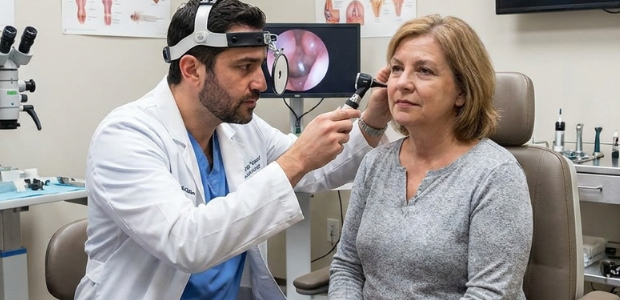
ENT practices bill for office visits, in-office endoscopy, sinus surgery, sleep and voice care, and often audiology, sometimes all for the same patient over a few months. Each of those follows different rules. Endoscopy codes bundle into each other, sinus surgery has a 0-day global that changes how follow-up care is billed, and audiology services have coverage limits that physician services don’t.
Credentialing has more moving parts than most specialties. Audiologists, NPs, and PAs each need their own payer enrollment, and practices that operate in a surgery center need privileges and facility contracts there too.
Key Takeaways
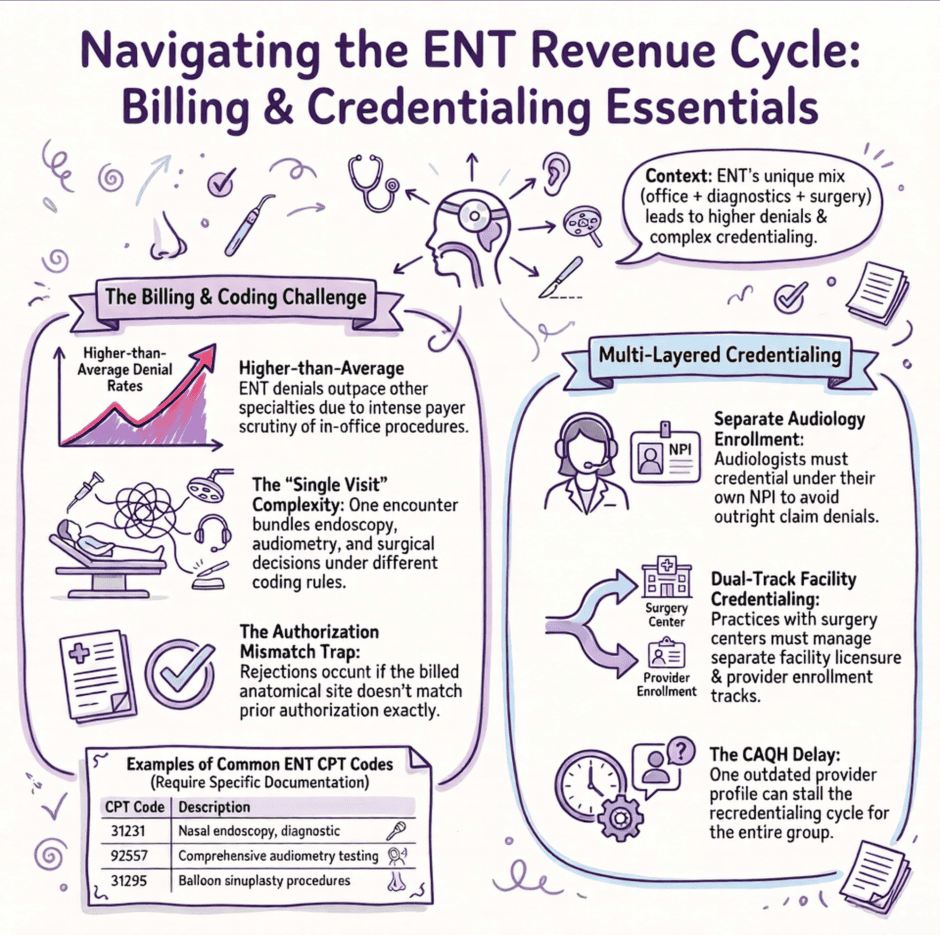
- Diagnostic nasal endoscopy (31231) is bundled into a surgical sinus endoscopy in the same session and needs modifier 25 support when billed with an E/M visit.
- Endoscopic sinus surgery codes carry a 0-day global, so postoperative debridement (31237) can be billed on later visits.
- Image guidance during sinus surgery bills as the add-on code 61782.
- Medicare covers diagnostic audiology testing but excludes hearing aids and routine hearing exams.
- Audiologists enroll with Medicare on their own and can see patients once every 12 months without an order using the AB modifier.
Office Endoscopy and Procedures
 Nasal endoscopy and laryngoscopy are the core of in-office ENT work. Diagnostic nasal endoscopy bills as 31231, and flexible diagnostic laryngoscopy as 31575. Laryngoscopy with stroboscopy is 31579. When the physician also evaluates the patient that day, the E/M is billable only when it goes beyond the decision to scope, and the E/M line needs modifier 25.
When a scope turns into a procedure, the diagnostic code drops off. Nasal endoscopy with biopsy, polypectomy, or debridement bills as 31237, and the diagnostic 31231 isn’t billed with it. Cerumen removal requiring instrumentation is 69210, and removal by irrigation or lavage is 69209. Both are unilateral codes, so bilateral removal takes modifier 50.
Sinus Surgery and Balloon Dilation
Functional endoscopic sinus surgery codes describe each sinus opened. Ethmoidectomy, maxillary antrostomy, frontal sinusotomy, and sphenoidotomy each have their own codes, and combined codes such as 31253, 31257, and 31259 cover total ethmoidectomy with frontal or sphenoid work. When image guidance is used, the add-on code 61782 is billed once per session.
Balloon sinus dilation bills by sinus. 31295 covers the maxillary sinus, 31296 the frontal, 31297 the sphenoid, and 31298 the frontal and sphenoid together. Balloon dilation of a sinus isn’t billed with an endoscopic surgery code on the same sinus in the same session.
Endoscopic sinus surgery codes carry a 0-day global period. That means postoperative debridement visits in the weeks after surgery can be billed as 31237 when the documentation supports it. Septoplasty (30520) and turbinate reduction carry their own global periods, so the follow-up rules depend on which procedures were done together.
Common ENT CPT Codes
- 31231 (diagnostic nasal endoscopy)
- 31237 (nasal or sinus endoscopy with biopsy, polypectomy, or debridement)
- 31575 (flexible diagnostic laryngoscopy)
- 31253 to 31259 (endoscopic sinus surgery, combined ethmoid procedures)
- 31295 to 31298 (balloon sinus dilation, by sinus)
- 61782 (add-on for image-guided sinus surgery)
- 30520 (septoplasty)
- 42820 and 42821 (tonsillectomy and adenoidectomy, under age 12 and age 12 and older)
- 69210 (cerumen removal requiring instrumentation, per ear)
- 92557 (comprehensive audiometry)
Audiology Billing
 Audiologists in ENT practices bill diagnostic tests such as comprehensive audiometry (92557), tympanometry (92567), and acoustic reflex testing. Medicare covers these when they’re done to diagnose a hearing or balance condition, not as routine screening. Hearing aids and the exams to fit them are excluded from Medicare by statute, although many Medicare Advantage plans offer a hearing aid benefit of their own.
Medicare allows patients to see an audiologist without a physician order once every 12 months for nonacute hearing problems, billed with the AB modifier. Other visits still need an order from a physician or NPP. Audiology claims billed under a physician’s NPI instead of the audiologist’s are a common compliance problem.
Prior Authorization and Documentation
Many commercial plans and Medicare Advantage plans require prior authorization for sinus surgery, balloon dilation, septoplasty, and turbinate reduction. Requests usually need CT findings, documented symptoms over time, and a failed course of medical treatment such as nasal steroids or antibiotics. Balloon dilation draws the closest review.
The approval has to match the sinuses treated and the technique used. If the authorization lists balloon dilation of one sinus and the surgeon treats two, or switches to endoscopic surgery, the claim can deny, which we cover in why an approved authorization can still end in a denied claim. ENT practices that run allergy testing and immunotherapy also follow the rules on our allergy testing page.
ENT Credentialing

Physicians
Otolaryngologists certify through the American Board of Otolaryngology, Head and Neck Surgery. Payers verify board status, licensure, DEA registration, and malpractice history, usually through CAQH ProView. Hospitals and surgery centers grant privileges procedure by procedure, so a surgeon adding balloon dilation or a new sinus technique may need documented training first.
Audiologists, NPs, and PAs
Audiologists enroll with Medicare individually and reassign benefits to the group, and they need separate contracts with each commercial plan that covers audiology. NPs and PAs who see follow-up and postoperative patients need their own enrollment as well. Until each provider is approved, their services can’t be billed, which is why you can’t bill what you can’t credential.
Surgery centers
Practices that own or partner with an ambulatory surgery center need the center enrolled and contracted separately from the physicians. Payer participation is checked by facility as well as by provider, so a case done at a facility outside the patient’s network can deny even when the surgeon is in network.
ENT Billing FAQs
Can diagnostic nasal endoscopy be billed with a surgical endoscopy?
No. 31231 is included in surgical sinus endoscopy codes performed in the same session, such as 31237 or the sinus surgery codes.
Is debridement after sinus surgery billable?
Usually yes. Endoscopic sinus surgery codes have a 0-day global period, so a later debridement visit can be billed as 31237 when the documentation supports it.
How is balloon sinus dilation coded?
By sinus. 31295 is maxillary, 31296 is frontal, 31297 is sphenoid, and 31298 is frontal and sphenoid together.
Does Medicare cover hearing aids?
No. Traditional Medicare excludes hearing aids and the exams to fit them. It covers diagnostic hearing and balance testing, and many Medicare Advantage plans add a hearing aid benefit.
Do audiologists need a physician order for Medicare patients?
Not for one visit every 12 months for nonacute hearing problems, billed with the AB modifier. Other audiology services still need an order from a physician or NPP.
How is image-guided sinus surgery billed?
The sinus surgery codes are billed with the add-on code 61782, once per session.
Bringing ENT Billing to Medwave
 ENT practices bill in-office endoscopy, sinus surgery, and hearing tests, often for the same patient in the same month. Medwave catches the bundling between nasal endoscopy and same-day sinus procedures, applies bilateral modifiers the way each payer wants them, and bills audiology under the right provider. ENT claims through our billing team clear at 98%.
Many plans treat audiology as its own network, so our credentialing team enrolls otolaryngologists and audiologists separately, averaging 85 days. Balloon sinus dilation and allergy services are usually the first codes we look at in a payer contracting review.
List the ENT services you offer in the form below, and we’ll take it from there.