

A medical billing specialist plays a crucial role in the healthcare industry. They are responsible for managing the financial side of healthcare, which includes submitting claims to insurance companies and following up on any denied claims. A medical billing specialist is responsible for submitting and following up on claims to insurance companies for payment for medical services provided to patients. They process and track payments, resolve insurance and patient billing disputes, and maintain accurate medical billing records. The goal of a medical billing specialist is to ensure that the medical facility or provider is reimbursed correctly and promptly for services rendered to patients.
How Do You Become a Medical Billing Specialist?
Step 1: Gain an Understanding of the Healthcare Industry
Before diving into the specifics of medical billing, it is important to have a solid understanding of the healthcare industry. Familiarize yourself with terms and concepts such as medical coding, insurance billing, and patient billing. Understanding the different types of insurance and healthcare systems is also key to being a successful medical billing specialist.
Step 2: Obtain the Right Education
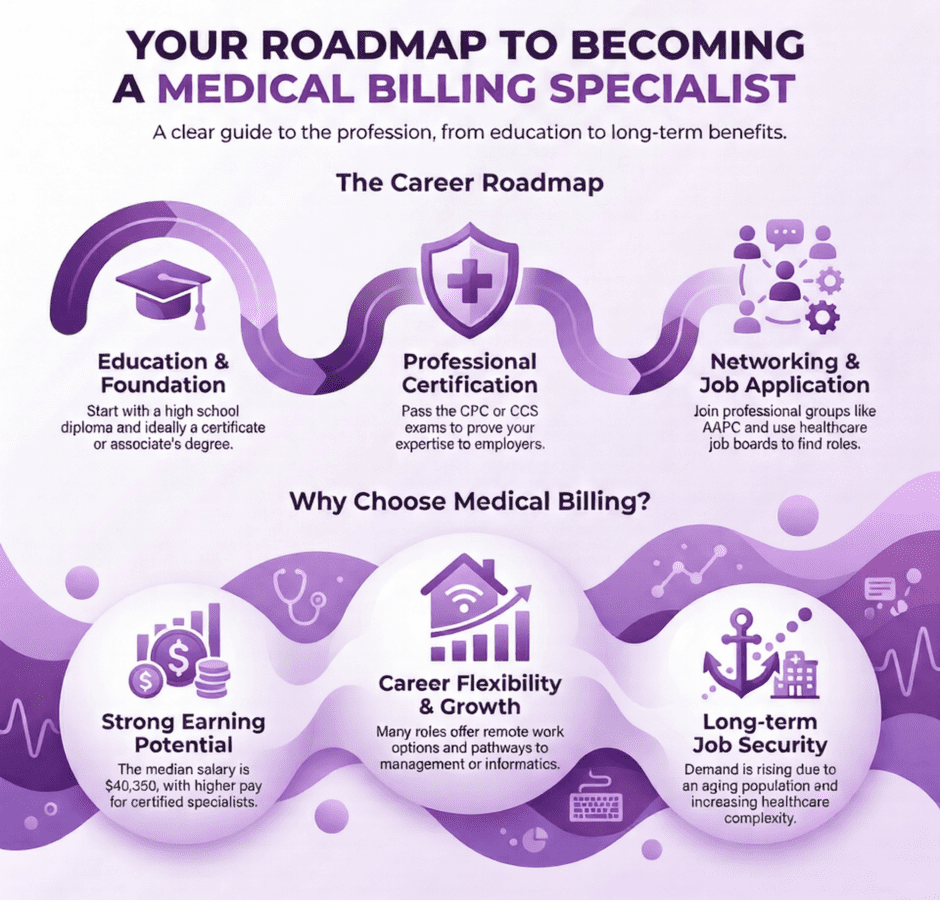
To become a medical billing specialist, you need to have a strong foundation in the field. A high school diploma or equivalent is usually the minimum requirement, but obtaining a certificate or associate’s degree in medical billing and coding is highly recommended. These programs will provide you with the knowledge and skills necessary to work in a medical billing and coding role.
Step 3: Gain Relevant Work Experience
Having work experience in the healthcare industry is an advantage, but not a requirement to become a medical billing specialist. However, gaining experience through an internship or working in a related field, such as a medical office, will help you build your knowledge and give you a competitive edge when it comes to finding a job.
Step 4: Obtain a Professional Certification
A professional certification can help demonstrate your expertise in medical billing and coding to potential employers. The two most recognized certifications are the Certified Professional Coder (CPC) and the Certified Coding Specialist (CCS). To obtain either of these certifications, you must pass a written exam and meet certain education and experience requirements.
Step 5: Stay Current with Industry Changes
Medical billing and coding is a constantly changing field, so it is important to stay current with any updates or changes in the industry. This can be achieved by attending conferences, workshops, or taking continuing education courses.
Step 6: Network and Build Relationships
Networking is key to success in any industry, and medical billing is no exception. Attend industry events and join professional organizations, such as the American Academy of Professional Coders (AAPC) or the Healthcare Financial Management Association (HFMA), to connect with other medical billing specialists and stay up-to-date on industry news and events.
Step 7: Apply for Jobs
Once you have completed your education and certification, it is time to start applying for jobs. Look for job openings on job boards, such as Indeed or Monster, or reach out to healthcare facilities and billing companies directly. Prepare a strong resume and cover letter highlighting your education, experience, and certifications to make a positive impression on potential employers.
What are the Benefits in Becoming a Medical Billing Specialist?
Being a medical biller can offer many benefits and opportunities for growth in the healthcare industry.
Some of these benefits include:
 Job Security
 Job Security
The healthcare industry is growing rapidly and the demand for medical billing specialists is on the rise. With the aging population and increasing healthcare costs, the need for individuals who can accurately manage the financial side of healthcare will continue to grow, providing job security in this field.
High Earning Potential
Medical billing specialists are in high demand, and as a result, they can earn a good salary. According to the Bureau of Labor Statistics, the median salary for a medical billing specialist in the United States is $40,350 per year. Additionally, those with certifications and several years of experience can earn even higher salaries.
Flexibility
Many medical billing specialist positions offer the flexibility of working from home or part-time, which can be beneficial for individuals who need a flexible work schedule.
Opportunities for Advancement
Medical coders and billers who continue to educate themselves and acquire additional certifications can advance in their careers to supervisory or managerial roles. Additionally, individuals with experience in medical billing and coding can also move into related fields such as healthcare administration, medical management, or medical informatics.
Ongoing Education
Many healthcare practices, including medical billing companies, understand the importance of ongoing education and professional development for their employees, and are often willing to invest in continuing education programs for their staff, including medical billers. This can help ensure that billers have the most up-to-date knowledge and skills to handle the complex and ever-changing field of medical billing and insurance. It can also lead to improved job performance and overall success for both the biller and the healthcare practice.
Making a Difference
Medical billing specialists play a crucial role in the healthcare industry by accurately managing the financial side of healthcare. Their work helps ensure that patients receive the best possible care, and their efforts can have a positive impact on the lives of many individuals.
Medical Billing Specialist FAQ
What does a medical billing specialist do?
A medical billing specialist submits and follows up on claims sent to insurance companies for services provided to patients. They process payments, resolve billing disputes between insurers and patients, and keep accurate billing records. Their main job is to make sure the healthcare provider gets paid correctly and on time.
What education do I need to become a medical billing specialist?
A high school diploma or equivalent is the minimum requirement to start. Most employers prefer candidates who complete a certificate or associate’s degree program in medical billing and coding. These programs teach the terms, systems, and processes needed for the job.
Do I need work experience before getting a medical billing job?
Work experience is not required, but it gives job seekers an advantage. An internship or a job in a medical office helps build practical knowledge of billing tasks. This kind of experience can make a resume stand out to hiring managers.
What certifications help medical billing specialists find jobs?
The Certified Professional Coder (CPC) and Certified Coding Specialist (CCS) are the two most recognized certifications in this field. Both require passing a written exam and meeting set education and experience requirements. Holding one of these shows employers a proven level of billing and coding knowledge.
How can I stay current in the medical billing field?
Medical billing rules and codes change often, so ongoing learning matters. Attending conferences, workshops, and continuing education courses keeps skills and knowledge up to date. Joining groups like the AAPC or HFMA also provides access to industry news and training.
How do I find a job as a medical billing specialist?
After finishing education and certification, search job boards such as Indeed or Monster, or contact healthcare facilities and billing companies directly. Networking through professional organizations can also lead to job leads and referrals. A strong resume and cover letter that highlight education, experience, and certifications will help applicants stand out.
Summary: Become a Medical Billing Specialist
 Becoming a medical billing specialist requires a combination of education, experience, and professional certifications. The healthcare industry is constantly changing, so it is important to stay current and continue learning to advance your career. A medical billing specialist position can offer job security, high earning potential, flexibility, opportunities for advancement, and the satisfaction of making a positive impact on the healthcare industry. These benefits make medical billing and coding an attractive career choice for those who are interested in pursuing a career in the healthcare field. You can become a successful medical billing specialist and make a positive impact on the healthcare industry through following the aforementioned steps.
Contact Medwave below, we can help improve the medical billing processes and workflow.

Co-Founder and COO of Medwave, bringing more than 30 years of hands-on experience in healthcare revenue cycle management, payer contracting, and medical credentialing.