

References are the one part of a credentialing application you can’t fill out yourself. Everything else is documents and dates. References are other people’s opinions of your work, written on their schedule, and a weak or late one can hold up approval for weeks.
Most hospitals and payers ask for two kinds.
Key Takeaways
- Credentialing applications usually ask for two kinds of references
- Professional references from supervisors and administrators who have seen how you work
- Peer references from physicians in your specialty who can judge your clinical skill
- A detailed reference from a colleague who works with you every week beats a short one from a department chair who barely knows you.
- Reference forms go well past character questions and ask peers to rate clinical competence, procedures and professional conduct.
- Collecting references can take weeks, so ask early and give each reference your CV and requested privileges.
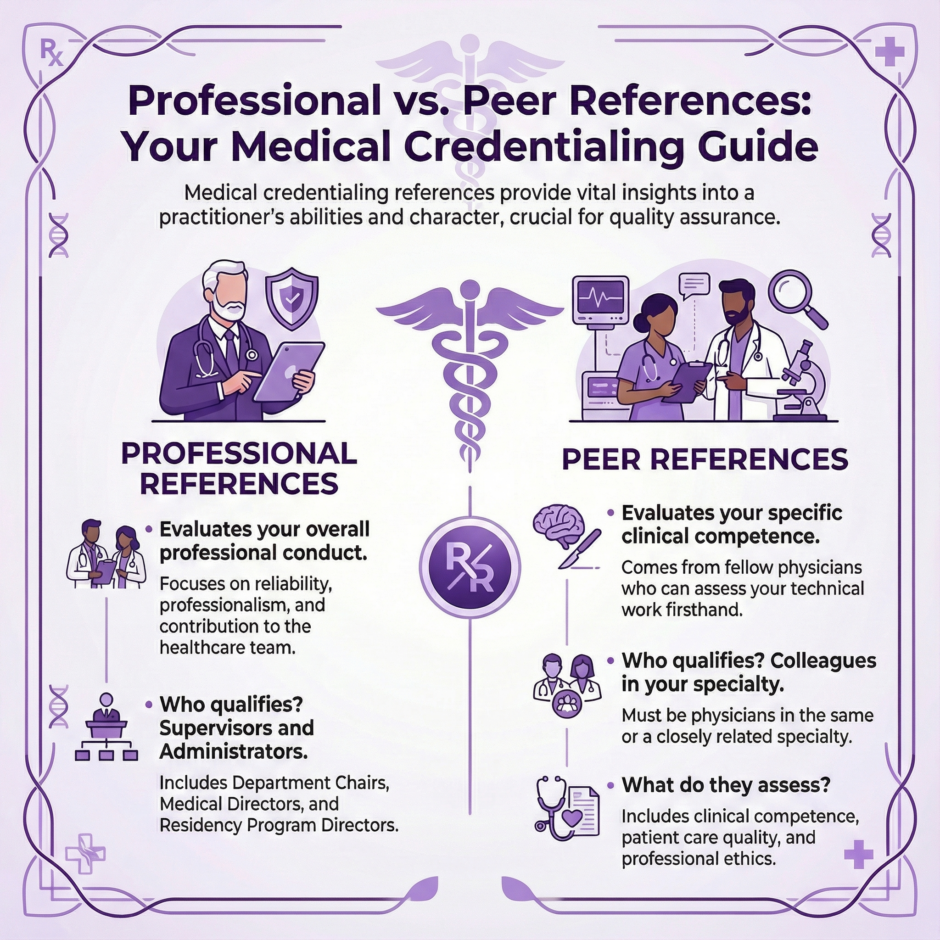
If you need the formal definitions first, start with what peer and professional references are and the qualifications each one has to meet. The rest of this is about choosing the right people and getting them ready.
What You Need to Know About References
People often use the two terms interchangeably. Credentialing committees don’t.
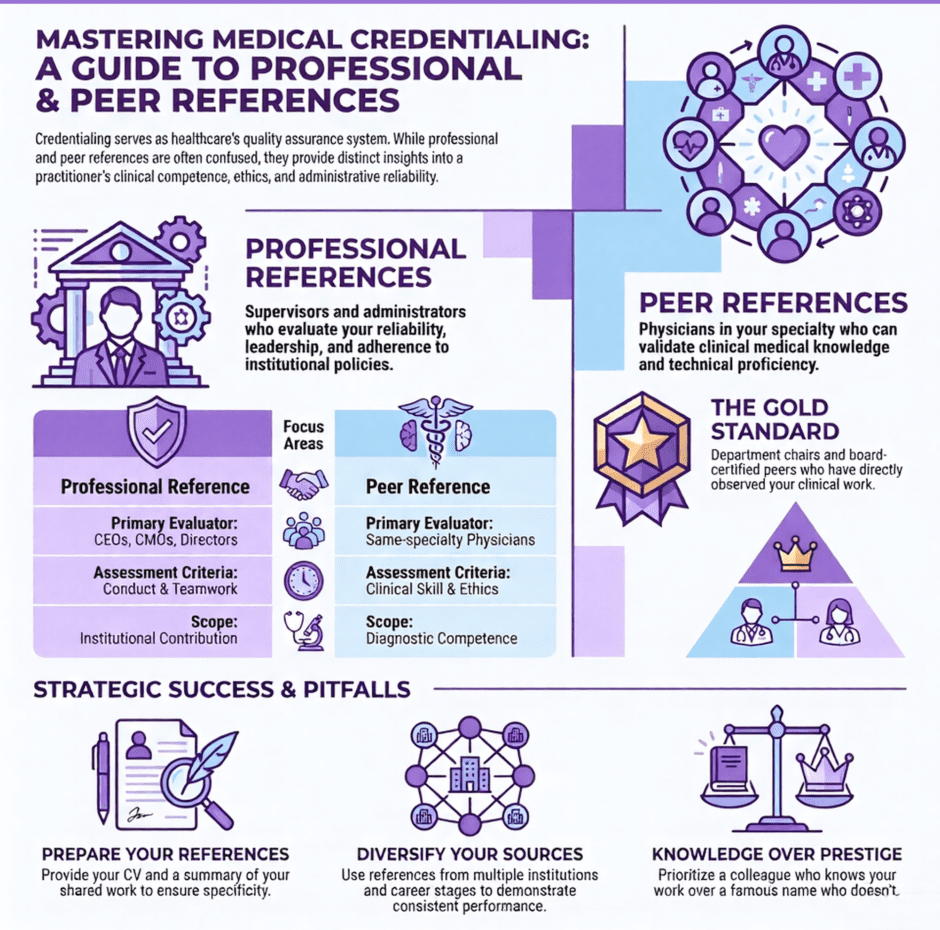
A professional reference speaks to how you work. That usually means a supervisor, department head or medical director who can comment on your reliability and how you follow policy.
A peer reference speaks to how you practice medicine. It comes from a physician or practitioner who works alongside you and understands the clinical side of what you do, which is why committees give peer references so much weight.
Who Qualifies as a Professional Reference?
 More people qualify than most physicians assume. Some carry more weight than others, though.
Department chairs and division chiefs are usually the strongest choice. They oversee your clinical work directly and can speak to it in detail. Medical directors and chief medical officers work well too, especially if you served on a committee with them or worked on a quality improvement project together.
Early in your career, your residency or fellowship program director may be the best reference you have. They watched you take on more responsibility over several years, and committees know it.
Don’t rule out non-physicians. A nursing director or hospital administrator who has watched you work with a care team can add something a clinical reference won’t.
In private practice, the options shift to your practice partners and your practice administrator. They see how you manage patients day to day, and they understand how a private practice runs.
Peer Reference Requirements
Committees are stricter about peer references. The core rule is that a peer has to practice in your specialty, or one close to it, and has to be able to judge your clinical work.
A board-certified physician in your specialty who has seen you work is the best peer reference you can offer. Shared call schedules count. So do consults and patients you’ve co-managed.
Subspecialists can help if your practice is narrow. A cardiologist applying for interventional privileges might list one general cardiologist and one interventional cardiologist, depending on the privileges requested.
Reputation matters. A well-known physician in your community lends credibility to the file, but a younger colleague who works with you every week may give a more useful and current account of how you practice.
If you work in an academic setting, a research collaborator can speak to your analytical work. That kind of reference is most useful when the position includes research or teaching.
Information Peer References Need to Provide
 Peer reference forms are long. Knowing what’s on them helps you choose people who can answer every section.
Clinical competence gets the most space. Expect questions about diagnosis and treatment planning, and about your skill with any procedures you perform. Many forms use numerical rating scales. Some ask for specific examples of your clinical decisions.
Patient care comes next. References may be asked how you communicate with patients and families, and how you coordinate with the rest of the care team. Then conduct. Forms commonly ask about punctuality and how you take feedback, and most include standard questions about substance abuse, criminal history and ethical violations.
Scope of practice is getting more attention. A peer may be asked to confirm that the privileges you’re requesting match your training and experience. This part matters most if you’re expanding your scope or moving into a new specialty.
Some forms also ask about your involvement in quality improvement and patient safety work.
The Reference Collection Process
Start early. Getting completed references back can take several weeks, sometimes months, and slow references are a common reason a credentialing timeline slips.
When you ask someone, give them what they need to write something specific. That means your CV and a summary of the privileges you’re requesting. If there’s an area you want them to cover, say so.
Tell them the deadline up front.
A short note about your work together helps as well. Mention the cases or projects they’re likely to remember. You shouldn’t tell a reference what to say, but reminding them of shared work gets you a more detailed evaluation. It also helps their account line up with the dates on your application, which committees compare against your work history.
Common Reference Pitfalls to Avoid
 The biggest mistake is picking a reference for their title. A department chair who barely knows you will write a short, generic reference. A colleague who works with you regularly will write a detailed one, and committees can tell the difference.
Don’t draw every reference from one hospital or one stretch of your career, either. Credentialing committees want to see consistent performance across settings.
Ask each reference only about what they’ve seen. A surgical colleague may not be the right person to evaluate your medical management, and a medical peer may not be qualified to judge your procedures.
International references need extra care. They can be valuable, but make sure the person understands the standards of the organization you’re applying to.
Preparing Your References for Success
Your references want to help. Most will do a better job if you get on a short call with them first and answer their questions about the form. Send your application materials and the job description, and if the credentialing organization publishes its standards, send those along. The more context they have, the more specific the reference gets.
Keep them posted. If the process drags past the original deadline, check in so you know they’re still available.
If you can get a sample of a well-completed reference form, share it. It shows the level of detail committees look for without putting words in anyone’s mouth.
Professional and Peer References FAQ
Who should I choose as a peer reference?
Choose a board-certified physician in your specialty who has seen your clinical work firsthand, through shared call or co-managed patients.
What do peer reference forms ask about?
Most ask peers to rate your clinical competence and patient care, along with your professional conduct. Many also ask whether your requested privileges match your training.
How long does it take to collect credentialing references?
Plan for several weeks. Some references take months to come back, so request them as early as you can.
How many references does a credentialing application need?
Usually three to five. The exact number varies by facility and payer, so check each application before you start asking.
Should I tell my references what to say?
No. Give them your CV, your requested privileges and a reminder of the work you did together, then let them write their own assessment.
How Medwave Helps With Credentialing
References are one piece of a much larger file. Medwave’s medical credentialing team handles the application from document collection through approval, and follows up with payers and facilities until it’s done.

Co-Founder and COO of Medwave, bringing more than 30 years of hands-on experience in healthcare revenue cycle management, payer contracting, and medical credentialing.