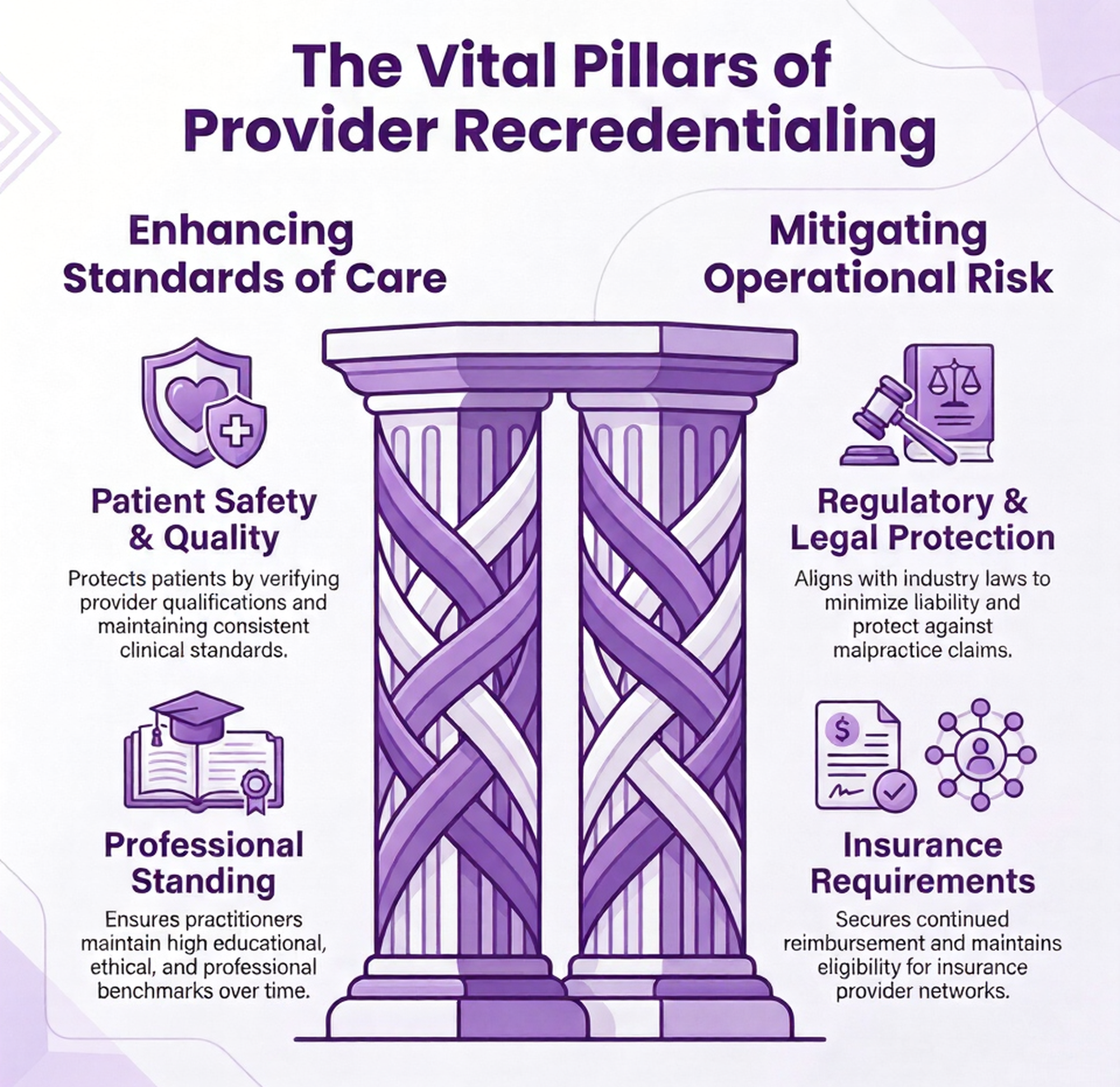
Recredentialing is the periodic re-verification of a provider’s credentials by the payer, hospital, or other organization that first credentialed them. Payers following NCQA standards recredential at least every 36 months from the last credentialing decision. Hospitals reappoint their medical staff on a separate cycle. The Joint Commission has allowed a three-year reappointment cycle since late 2022, though many hospitals keep a two-year cycle and some states require it by law.
The review covers much of the same ground as the first application. The organization re-verifies the state license, DEA registration, board certification, and malpractice coverage, checks sanction and exclusion lists, and asks about new claims, disciplinary actions, or changes in privileges. It also looks at performance data such as peer review results and quality metrics, which an initial application does not have.
CAQH (now DataSpring, powered by CAQH) runs on a faster clock. The profile must be re-attested at least every 120 days, or every 180 days in Illinois, and payers pull much of their recredentialing data from it. Keep licenses, practice locations, and insurance current as they change, and answer each payer’s recredentialing notice promptly. A missed deadline can mean suspended privileges or removal from a payer panel, which interrupts in-network payment.
More detail is on the recredentialing service page. The article on staying credentialed walks through the process step by step, and Medicare revalidation follows its own schedule.