

Remember the days when healthcare provider enrollment meant drowning in a sea of paperwork? I’m talking about mountains of forms, countless phone calls, and weeks (or even months) of waiting for approvals. It’s fascinating to see how far we’ve come from those paper-heavy days to today’s streamlined digital provider enrollment processes. We’ll examine this remarkable transformation that has revolutionized how healthcare providers join insurance networks and medical groups.
The Paper Era: Where It All Began
Back in the day (and we’re talking not too long ago), provider enrollment was nothing short of a administrative nightmare. Picture this: a newly graduated physician wanting to join an insurance network would need to complete dozens of different applications, each requiring essentially the same information but in slightly different formats. Fun times, right?
Traditional Paper-Based Process
A typical enrollment packet would include countless pages requiring detailed information about:
- Medical education and training
- Board certifications
- State licenses
- Malpractice insurance
- Hospital privileges
- Work history
- Professional references
- DEA certificates
- CAQH credentials

Here’s the kicker: providers had to fill out this information repeatedly for each insurance company, hospital, or healthcare organization they wanted to work with. It was like writing the same essay over and over again, just changing the header each time.
The verification process wasn’t any better. Staff members had to manually verify each piece of information by calling schools, previous employers, and licensing boards. They’d then file these verifications in massive folders that would eventually take up entire rooms of storage space. If you needed to find something specific? Well, hope you packed a lunch because you’d be digging through files for hours.
The Breaking Point: Why Change Was Necessary
By the early 2000s, it became crystal clear that the paper-based system was no longer sustainable.
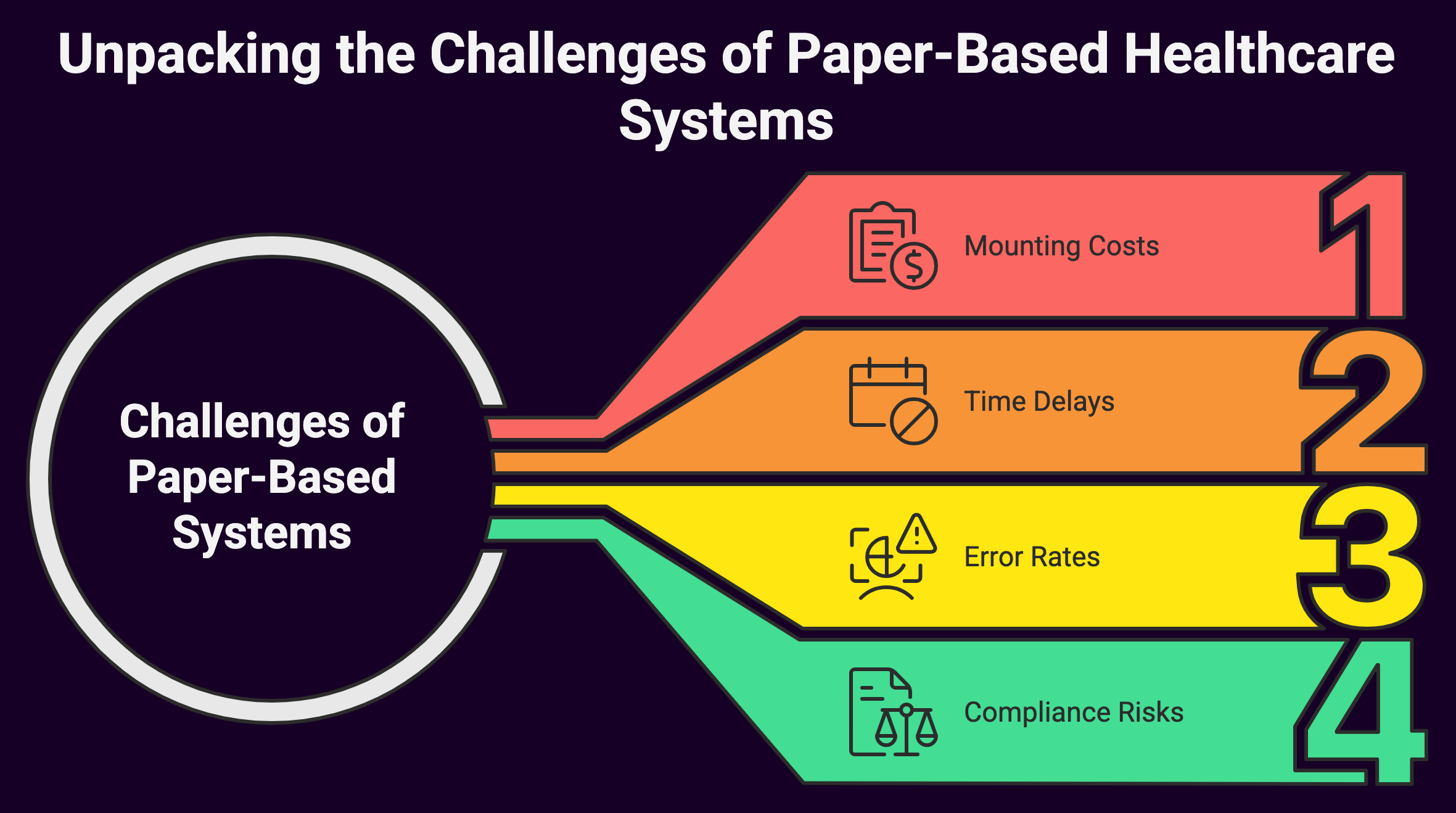
Healthcare organizations were facing several critical challenges:
Mounting Costs
The expenses associated with paper-based enrollment were astronomical. Think about it: paper, printing, postage, storage space, and the sheer number of staff hours required to process applications. One study estimated that the average cost of credentialing a single provider could range from $200 to $400, not including the organization’s overhead costs.
Time Delays
The timeline for completing provider enrollment could stretch anywhere from 90 to 180 days. That’s half a year of potential revenue lost while waiting for paperwork to process! These delays weren’t just frustrating – they were costly for both healthcare organizations and providers.
Error Rates
Human error in manual data entry was a constant issue. One missing digit in a license number or a transposed date could result in rejected applications and restart the entire process. Studies showed that paper-based credentialing had an error rate of up to 10%, meaning one in ten applications had some type of mistake.
Compliance Risks
Keeping up with changing regulations and maintaining accurate records was becoming increasingly difficult. The risk of non-compliance with state and federal regulations was a constant concern, especially as healthcare regulations became more complex.
The Digital Dawn: Early Attempts at Modernization
The first wave of digital transformation in provider enrollment began in the late 1990s and early 2000s. Organizations started with basic digital solutions, like scanning paper documents and storing them electronically. While this was a step forward from physical storage, it was really just digitizing the paper problem rather than solving it.
The Council for Affordable Quality Healthcare (CAQH) made a significant breakthrough in 2002 with the launch of ProView (formerly known as the Universal Provider Datasource). This platform allowed providers to submit their information once and share it with multiple organizations – a radical concept at the time! At Medwave, we’ve produced our own form which allows our clients to create or update a CAQH Pro-View account.
Early digital solutions faced their own challenges:
Technology Limitations
Early software was often clunky and not user-friendly. Many healthcare organizations lacked the IT infrastructure to support these new systems, and staff members needed extensive training to use them effectively.
Resistance to Change
Change is hard, and many organizations and providers were hesitant to abandon familiar paper-based processes. There were concerns about data security, system reliability, and the learning curve associated with new technology.
Integration Issues
Different systems often couldn’t communicate with each other effectively, leading to data silos and the need for manual data entry despite having digital systems in place.
The Modern Era: True Digital Transformation
Fast forward to today, and the provider enrollment landscape has undergone a complete metamorphosis.
Modern digital credentialing and enrollment systems offer features that would have seemed like science fiction just a few decades ago:
Automated Primary Source Verification
Modern systems can automatically verify credentials with primary sources, reducing the verification process from weeks to days or even hours. These systems maintain continuous monitoring of licenses, sanctions, and other critical credentials, alerting organizations to any changes in real-time.
Cloud-Based Solutions
Cloud technology has revolutionized how provider data is stored and accessed.
Organizations can now:
- Access provider information from anywhere with an internet connection
- Scale their storage needs up or down as required
- Implement automatic backups and disaster recovery
- Share data securely across multiple locations and systems
Artificial Intelligence and Machine Learning
AI has transformed many aspects of provider enrollment:
- Intelligent form filling that can pull data from various sources
- Predictive analytics to identify potential issues before they become problems
- Automated document classification and data extraction
- Smart scheduling for renewal deadlines and expiration dates
Blockchain Technology
Some organizations are now exploring blockchain for provider credentialing, offering benefits like:
- Immutable record-keeping
- Reduced fraud risk
- Improved data sharing between organizations
- Enhanced security and privacy
The Benefits of Digital Transformation
The shift to digital provider enrollment has delivered numerous tangible benefits:
Faster Processing Times
What once took months can now be completed in weeks or even days. Some organizations report reducing their enrollment timeline by up to 75% after implementing digital solutions.
Cost Reduction
Digital processes have significantly reduced costs associated with provider enrollment:
- Decreased paper and storage expenses
- Reduced staff time for manual data entry
- Lower correction and resubmission costs
- Minimized delays in provider onboarding and billing
Improved Accuracy
Digital systems have dramatically reduced error rates through:
- Automated data validation
- Standardized forms and processes
- Real-time error checking
- Elimination of manual data entry
Enhanced Provider Experience
Modern digital enrollment systems have transformed the provider experience:
- Single sign-on access to multiple organizations
- Mobile-friendly interfaces
- Automated renewal notifications
- Real-time application status tracking
Challenges and Considerations in the Digital Age
Despite the tremendous progress, the digital transformation of provider enrollment isn’t without its challenges:
Data Security and Privacy
With increasing cybersecurity threats, organizations must invest heavily in:
- Robust security measures
- Regular security audits
- Staff training on data protection
- Compliance with HIPAA and other regulations
Integration Complexity
Healthcare organizations often use multiple systems that need to work together seamlessly:
- Electronic Health Records (EHR)
- Practice Management Systems
- Revenue Cycle Management Systems
- Credentialing Software
Cost of Implementation
While digital systems save money in the long run, the initial investment can be substantial:
- Software licensing fees
- Hardware upgrades
- Staff training
- Data migration costs
Best Practices for Modern Provider Enrollment
For organizations looking to optimize their digital provider enrollment processes, here are some key best practices:
Standardize Processes
Create standardized workflows for different provider types and specialties while maintaining flexibility for unique situations.
Implement Strong Data Governance
Establish clear policies for:
- Data entry standards
- Information updates
- Access controls
- Data quality monitoring
Provide Comprehensive Training
Ensure all stakeholders are properly trained on:
- System functionality
- Security protocols
- Compliance requirements
- Best practices for data entry and maintenance
Regular System Evaluation
Continuously assess and optimize your digital enrollment system:
- Monitor performance metrics
- Gather user feedback
- Stay current with technology updates
- Evaluate new features and capabilities
The Future of Provider Enrollment
Looking ahead, several emerging trends are likely to shape the future of provider enrollment:
Increased Automation
We’re likely to see even greater automation in:
- Document verification
- Data updates
- Compliance monitoring
- Risk assessment
Enhanced Integration
Future systems will offer:
- Seamless integration with all healthcare systems
- Real-time data synchronization
- Automated workflow management
- Universal provider profiles
Advanced Analytics
Organizations will leverage data analytics for:
- Predictive maintenance
- Risk management
- Process optimization
- Performance tracking
Improved User Experience
Future systems will focus on:
- Intuitive interfaces
- Mobile-first design
- Personalized workflows
- Real-time support and guidance
Provider Enrollment FAQ
What did provider enrollment look like before digital systems were used?
Providers filled out dozens of paper applications with mostly the same information in different formats for each insurance company or hospital. Staff verified details by phone with schools, employers, and licensing boards, then stored the results in large paper files. Finding a single record often meant searching through rooms of folders for hours.
How much did paper-based credentialing typically cost per provider?
One study cited on the page estimated the cost of credentialing a single provider at between $200 and $400. That figure did not include additional overhead costs carried by the healthcare organization. Multiplied across many providers and applications, these costs added up quickly.
How long did the old paper enrollment process usually take?
The timeline for finishing provider enrollment could run anywhere from 90 to 180 days. That meant up to half a year of waiting before a provider could start billing or seeing patients under a new network. These delays created real revenue loss for both providers and organizations.
What kinds of errors were common in manual provider enrollment?
Manual data entry led to mistakes such as a missing digit in a license number or a transposed date on a form. According to the page, paper-based credentialing had an error rate of up to 10 percent. A single error could cause an application to be rejected and force the whole process to start over.
What information did a typical paper enrollment packet require?
A standard packet asked for details on medical education and training, board certifications, state licenses, and malpractice insurance. It also required hospital privileges, work history, professional references, DEA certificates, and CAQH credentials. Providers had to repeat this same information separately for every insurance company or organization they applied to.
Why did healthcare organizations decide paper-based enrollment needed to change?
By the early 2000s, rising costs, long processing delays, high error rates, and compliance risks made the paper system hard to maintain. Storage, printing, postage, and staff hours all drove up expenses without speeding up approvals. These pressures pushed organizations toward digital enrollment methods.
Summary: Paper to Digital Transformation Provider Enrollment
The transformation of provider enrollment from paper to digital has been nothing short of revolutionary. What was once a time-consuming, error-prone process has evolved into a streamlined, efficient system that benefits all stakeholders in the healthcare ecosystem. As technology continues to advance, we can expect even more innovations that will further improve the provider enrollment process.
Organizations who embrace this digital transformation while maintaining focus on security, compliance, and user experience will be best positioned to thrive in the evolving healthcare landscape. The key is to view digital transformation not as a one-time project but as an ongoing journey of continuous improvement and adaptation to changing needs and technologies.

Co-Founder and COO of Medwave, bringing more than 30 years of hands-on experience in healthcare revenue cycle management, payer contracting, and medical credentialing.