
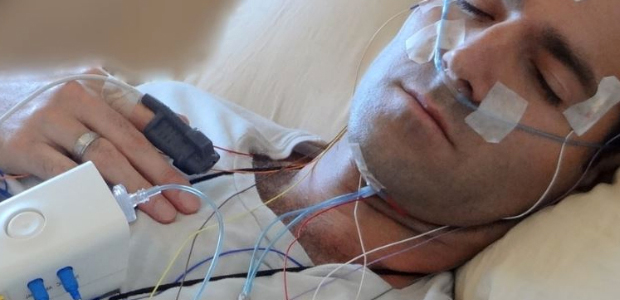
Sleep study lab billing splits almost every test into two claims, a technical one for the lab that ran the overnight recording and a professional one for the physician who read it. Who bills which part depends on whether the lab is hospital-based, physician-owned, or an independent testing facility, and getting that wrong is behind many of the denials sleep labs see before coding even comes into it.
Key Takeaways
- In-lab polysomnography bills as 95810, and a split-night or titration study bills as 95811, never both for the same night.
- Home sleep apnea tests use 95800, 95801, or 95806, and Medicare uses G0398 through G0400 for the same studies.
- Freestanding labs billing Medicare for the technical component usually enroll as an independent diagnostic testing facility.
- Many payers require a home sleep test before they’ll approve an in-lab study for a patient without complicating conditions.
- CPAP coverage depends on the sleep study result and a documented 90-day adherence check, even though the DME supplier bills the device.
Sleep Study CPT Codes
 Attended in-lab polysomnography for patients 6 and older bills as 95810. A study that includes CPAP or bilevel titration, including a split-night study that starts diagnostic and switches to titration, bills as 95811 instead. The two are never billed together for the same night. Children under 6 have their own codes, 95782 for a diagnostic study and 95783 with titration.
A polysomnogram needs at least six hours of recording. A shorter study bills with modifier 52 for reduced services, and the record should explain why the study ended early.
The Multiple Sleep Latency Test and the Maintenance of Wakefulness Test both bill as 95805. An MSLT for suspected narcolepsy usually follows an overnight polysomnogram, and payers expect that overnight study on file.
Home sleep apnea testing
Unattended home tests use 95806, 95800, or 95801, depending on the channels the device records. Medicare uses its own codes for the same tests, G0398 for a type II device, G0399 for type III, and G0400 for type IV. Home tests pay much less than in-lab studies, but many commercial plans and Medicare Advantage plans require one first unless the patient has a condition like significant lung disease, heart failure, or a suspected non-apnea sleep disorder.
Technical, Professional, and Facility Billing
 Every sleep study code has a technical component and a professional component. A physician-owned lab that employs the technologists and reads its own studies bills the global code. When a hospital runs the lab, the hospital bills the technical side on its own facility claim, and the interpreting physician bills with modifier 26. When a freestanding lab contracts out the reads, the lab bills with modifier TC and the reading physician bills with 26.
Freestanding labs that aren’t part of a physician practice usually enroll with Medicare as an independent diagnostic testing facility. IDTF enrollment has its own standards, including listing the supervising physicians and the technologists who run each test, and the lab can only bill the tests it’s enrolled to perform. Many Medicare contractor policies also require the lab to hold AASM accreditation, the interpreting physician to be board certified in sleep medicine, or both, and technologists to hold a credential like the RPSGT.
Medicare Rules for Sleep Testing and CPAP
Medicare covers sleep testing when the treating practitioner documents symptoms of sleep apnea, such as witnessed apneas, daytime sleepiness, or loud snoring, in a face-to-face evaluation before the test. Home tests and in-lab studies are both covered, and the study result decides whether CPAP is covered afterward.
The lab doesn’t bill for the CPAP device. The DME supplier does, but coverage depends on the sleep study and the physician’s records. Medicare covers CPAP for an apnea-hypopnea index of 15 or more, or 5 to 14 with documented symptoms or conditions like hypertension or heart disease. Coverage past the first three months requires a follow-up visit between day 31 and day 91 that documents improvement and shows the device was used at least four hours a night on 70 percent of nights over a 30-day stretch. When that visit or the download is missing, the supplier’s claim stops and the patient often gets caught in the middle. Our DME page covers the supplier’s side of those claims.
Prior Authorization and Denials
Commercial plans often send sleep testing through a benefit management company, and an in-lab study without a documented reason a home test won’t work is one of the most common denials. Prior authorization requests should include the symptoms, the screening score, comorbidities, and any failed or inconclusive home test.
Other common denials include 95810 and 95811 billed for the same night, global billing when a hospital owns the technical component, studies under six hours billed without modifier 52, an MSLT billed without the overnight study, and home tests billed to Medicare under CPT codes instead of the G codes.
Sleep Lab Credentialing

Interpreting physicians
Sleep medicine is a subspecialty certification offered through several boards, so interpreting physicians may come from pulmonology, neurology, internal medicine, psychiatry, or other specialties. Each one needs enrollment with every payer the lab bills, and payers that require sleep board certification check it during credentialing.
The lab as a billing entity
A freestanding lab enrolls separately from its physicians, as an IDTF with Medicare and as a facility or ancillary provider with commercial and Medicaid plans. Adding a new location or a new test type usually means updating that enrollment before billing starts, since a test billed from an unenrolled site or outside the lab’s approved list is denied. That’s why you can’t bill what you can’t credential.
Technologists
Sleep technologists don’t enroll with payers, but their credentials still matter. Medicare contractors and many commercial plans require the technologists who perform studies to hold a recognized credential, and an IDTF’s enrollment lists them by name.
Payer Contracting for Sleep Labs
Rates for in-lab studies vary widely between plans, and some contracts pay so little for 95810 and 95811 that an overnight study barely covers technologist time. Payer contracting reviews for sleep labs should compare in-lab and home test rates against Medicare, check whether the plan requires its benefit manager’s approval for every study, and look at how the contract treats split-night studies.
Sleep Study Billing FAQ
How is a split-night sleep study billed?
As 95811, which covers polysomnography with CPAP or bilevel titration. The diagnostic portion is included, so 95810 isn’t billed for the same night.
What codes does Medicare use for home sleep tests?
G0398, G0399, and G0400, based on the type of device. Commercial plans usually use CPT codes 95800, 95801, and 95806 for the same tests.
What happens if a sleep study runs less than six hours?
It bills with modifier 52 for reduced services, and the record should explain why the study ended early.
Does a freestanding sleep lab need to enroll as an IDTF?
Usually, if it isn’t part of a physician practice and bills Medicare for the technical component. IDTF enrollment lists the supervising physicians, the technologists, and the tests the lab is approved to perform.
Why do CPAP claims get denied after the sleep study?
Medicare requires a follow-up visit between day 31 and day 91 that documents improvement and shows the device was used at least four hours a night on 70 percent of nights over 30 days. When that documentation is missing, the supplier’s claim is denied.
Do sleep technologists need to be credentialed with payers?
Not individually, since technologists don’t bill under their own NPI. Medicare and many commercial plans do require them to hold a recognized credential like the RPSGT, and the lab has to show that when it enrolls. Medwave enrolls the lab and its reading physicians in about 85 days on average.
Sleep Lab Support from Medwave
 A sleep study can be billed globally or split between technical and professional claims, depending on who owns the equipment and who reads the study. Medwave sets up claims for each arrangement, uses Medicare’s G codes for home tests, and tracks the follow-up visits CPAP coverage depends on. Our sleep lab billing clears 98% of claims on the first pass.
The lab and its physicians enroll separately. We handle IDTF and facility enrollment for the lab and credentialing for each reading physician, averaging 85 days.
A short note below about your lab setup is enough to get started.