

In professional credentialing, primary source verification (PSV) stands as a critical safeguard ensuring the integrity, accuracy, and reliability of professional credentials. The process goes far beyond a simple checkbox exercise. It’s a meticulous method of confirming the authenticity of an individual’s professional qualifications, training, and background directly from the original issuing source.
Key Takeaways
- PSV is a direct, thorough credential authentication process
- It plays a crucial role in risk mitigation and safety assurance
- Technology is continuously transforming verification methods
- Ongoing adaptation is key to effective credentialing
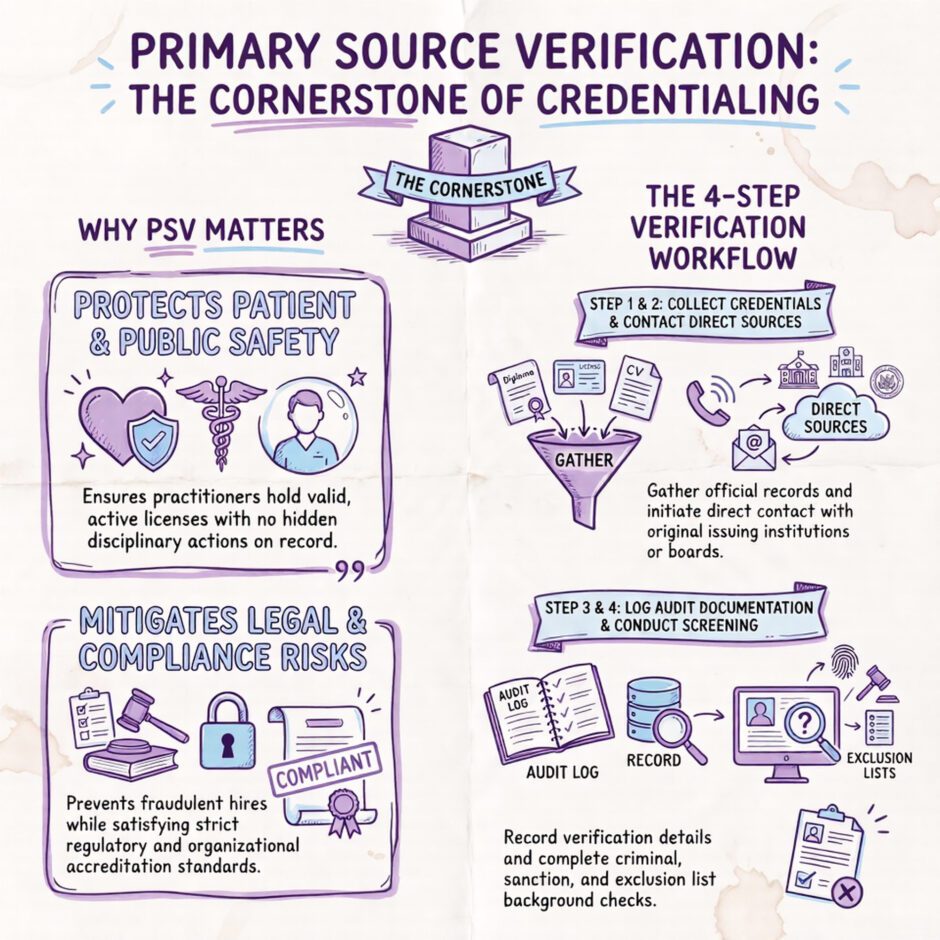
What is Primary Source Verification?
Primary source verification is a rigorous validation process where credentials, qualifications, and professional background are confirmed by directly contacting the original source that issued the credential. Unlike secondary verification methods that rely on copies or indirect confirmations, PSV requires direct communication with the original issuing institution, licensing board, or certifying organization.
In Credentialing, Why Primary Source Verification Matters
Ensuring Patient and Public Safety
 In industries like healthcare, where professional competence can literally mean the difference between life and death, primary source verification plays an absolutely crucial role.
Hospitals, healthcare organizations, and credentialing bodies use PSV to ensure that practitioners:
- Possess genuine, verifiable credentials
- Have completed required educational programs
- Maintain current and valid professional licenses
- Have no disciplinary actions that might compromise patient safety
Protecting Organizational Integrity
For organizations across various sectors, primary source verification serves multiple critical functions:
- Risk Mitigation: By thoroughly vetting credentials, organizations reduce the risk of hiring individuals with fraudulent or misrepresented qualifications.
- Compliance Assurance: Many regulatory bodies and accreditation standards mandate primary source verification as a key component of extensive background checks.
- Legal Protection: Thorough verification helps organizations demonstrate due diligence in their hiring and credentialing processes, potentially mitigating legal risks.
The Primary Source Verification Process: A Detailed Breakdown
Step 1: Information Collection
The PSV process begins with collecting all-inclusive information about an individual’s professional credentials.
This typically includes:
- Educational degrees and certifications
- Professional licenses
- Training certificates
- Work history and experience claims
- Professional references
Step 2: Direct Source Contact
Verification specialists initiate direct contact with the original issuing sources.
This might involve:
- Sending formal verification requests to academic institutions
- Contacting state licensing boards
- Reaching out to professional certification organizations
- Confirming employment history with previous employers
Step 3: Complete Documentation
Every step of the verification process is meticulously documented.
This documentation typically includes:
- Date of verification
- Contact method (phone, email, secured online platform)
- Name and position of the person providing verification
- Specific details verified
- Confirmation of authenticity
Step 4: Thorough Background Checks
Beyond credential verification, the process often includes:
- Criminal background checks
- Sanctions and exclusion list screenings
- Professional disciplinary action reviews
- Ongoing monitoring for credential status changes[/box]
Technological Advancements in Primary Source Verification
Digital Verification Platforms
Modern PSV has been revolutionized by technological innovations:
- Automated Verification Systems: Advanced software can streamline verification processes, reducing manual labor and potential human error.
- Secure Online Databases: Many professional organizations now maintain digital repositories that facilitate faster, more secure credential verification.
- Blockchain Technology: Emerging technologies offer promising solutions for creating immutable, verifiable credential records.
Challenges in the Digital Age
While technology has improved PSV, it has also introduced new challenges:
- Increased sophistication of credential fraud
- Complex international verification requirements
- Data privacy and security concerns
- Keeping verification technologies current with developing fraud techniques
Industry-Specific PSV Considerations
Healthcare Credentialing
In healthcare, primary source verification is particularly complex:
- Medical practitioners must verify credentials from multiple sources
- Ongoing license and certification maintenance
- Continuous professional development tracking
- Compliance with stringent regulatory requirements
Education Sector
Educational institutions use PSV to:
- Verify academic credentials of faculty and staff
- Ensure research integrity
- Maintain institutional reputation
- Comply with accreditation standards
Financial and Legal Sectors
These industries rely on PSV to:
- Validate professional certifications
- Ensure compliance with regulatory requirements
- Mitigate potential financial and reputational risks
- Maintain high professional standards
Best Practices in Primary Source Verification
All-embracing Approach
Effective PSV requires:
- Systematic and standardized verification processes
- Regular and ongoing credentialing monitoring
- Multi-layered verification techniques
- Adaptability to changing regulatory landscapes
Ethical Considerations
Organizations must balance thorough verification with:
- Respect for individual privacy
- Fair and non-discriminatory practices
- Transparency in verification processes
- Protecting sensitive personal information
The Future of Primary Source Verification
Emerging Trends
- Artificial Intelligence Integration: AI could enhance verification speed and accuracy
- Global Verification Networks: Increased collaboration across international verification platforms
- Real-time Credential Monitoring: Continuous, automated verification systems
- Standardized Global Verification Protocols: Critical evolution in credential authentication, addressing the challenges of an increasingly interconnected global workforce
Potential Technological Innovations
- Quantum encryption for credential verification
- Advanced biometric authentication
- Decentralized verification networks
- Machine learning predictive verification models
Primary Source Verification FAQ
What is primary source verification in credentialing?
Primary source verification is a validation process where credentials, qualifications, and professional background are confirmed by contacting the original source that issued them directly. This differs from secondary methods that rely on copies or indirect confirmations. It requires direct communication with the issuing institution, licensing board, or certifying organization.
Why is primary source verification important in healthcare settings?
In healthcare, verifying credentials directly protects patient safety by confirming that practitioners hold genuine qualifications and current licenses. It also confirms that required education has been completed and checks for any disciplinary actions on record. This process helps hospitals and credentialing bodies avoid placing unqualified individuals in patient care roles.
What organizational benefits come from primary source verification?
Organizations that use primary source verification reduce the risk of hiring people with fraudulent or misrepresented qualifications. It also supports compliance with regulatory and accreditation standards that require this type of check. Additionally, thorough verification records can help demonstrate due diligence and lower legal exposure.
What are the main steps in the primary source verification process?
The process starts with collecting information on degrees, licenses, certifications, work history, and references. Verification specialists then contact issuing institutions, licensing boards, and past employers directly to confirm each item. Every contact and result is documented, and additional background checks such as criminal records and sanctions screening are often included.
How is primary source verification different from secondary verification?
Secondary verification relies on copies of documents or third-party confirmations rather than the original issuing source. Primary source verification instead requires direct contact with the institution, board, or organization that granted the credential. This direct contact reduces the chance of relying on altered or outdated records.
What information gets documented during primary source verification?
Verification specialists record the date of contact, the method used such as phone, email, or a secured platform, and the name and position of the person who confirmed the credential. They also note the specific details checked and the confirmation of authenticity. This documentation creates a clear record for compliance and audit purposes.
Summary: PSV is Crucial for Credentialing

Primary source verification is a critical safeguard protecting organizational integrity, professional standards, and public safety. Within the medical world, technologies will develop and professional landscapes will become increasingly more complicated. With this reality, PSV will continue to adapt, becoming more sophisticated, efficient, and essential.
The human cost of verification failures extends beyond statistics and compliance reports. When unqualified individuals slip through inadequate screening processes, patients face real risks, from misdiagnoses and improper treatments to breaches of confidentiality and erosion of trust in healthcare systems. Each verification serves as a firewall against credential fraud, protecting vulnerable populations from those who would exploit gaps in oversight. Beyond healthcare, similar stakes exist across industries where professional credentials directly impact public welfare, from engineering projects affecting community safety to financial services handling people’s life savings.
Maintaining rigorous verification standards allows organizations to build teams of truly qualified, competent, and trustworthy professionals.

Co-Founder and COO of Medwave, bringing more than 30 years of hands-on experience in healthcare revenue cycle management, payer contracting, and medical credentialing.