
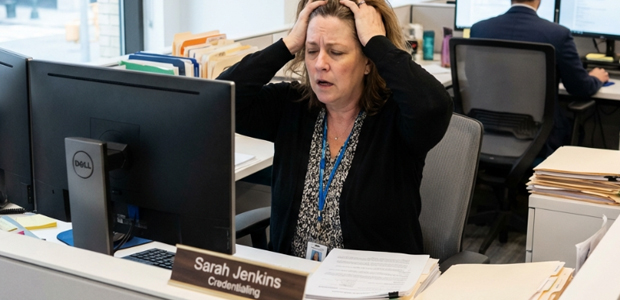
After weeks or months of waiting, the last thing anyone wants to see is a credentialing denial. It is frustrating, it disrupts revenue, and it puts provider onboarding on hold. Here’s the part that often gets overlooked, a denial is not necessarily the final word.
 A credentialing appeal is a formal request asking a payer to review and reconsider a denied credentialing application. It gives providers the opportunity to correct errors, clarify discrepancies, or submit additional documentation that supports their case for network participation. Most payers have a structured process for handling these requests, and using it correctly can be the difference between a provider who gets in-network and one who has to start over from scratch.
Most credentialing denials can be challenged. Many of them get overturned when the right response is submitted with the right documentation and the right framing. The key is knowing what you are dealing with, acting quickly, and building an appeal that actually addresses the reason the application was rejected in the first place.
Why Payers Deny Credentialing Applications
Before getting into how to fight a denial, it helps to know why they happen. Credentialing denials fall into a few general categories, and the strategy for responding depends heavily on which one you are dealing with.
The most common causes include:
- Incomplete or missing application information
Blank fields, missing signatures, or absent supporting documents are among the easiest reasons for a payer to kick an application back without processing it. - Data mismatches
When a provider’s name, Tax ID, NPI, or address does not match consistently across CAQH, NPPES, and the application itself, payers flag it as a discrepancy that has to be resolved before they will move forward. - Gaps in work history
Unexplained gaps of 30 days or more in a provider’s employment history are a common sticking point. Payers want to know where a provider was and what they were doing during any gap period. - License or malpractice issues
Active board complaints, disciplinary actions, or a malpractice history that does not meet a payer’s standards can trigger a denial that requires a more detailed response. - Closed panels
Sometimes a denial has nothing to do with the provider’s qualifications. The payer simply is not accepting new providers in that specialty or geography. These are harder to appeal, though not always impossible. - Expired or missing documents
DEA registrations, malpractice certificates, and board certifications all have expiration dates. If any of them lapsed before or during the application process, the payer has grounds to deny.
Knowing which category your denial falls into is the first step toward building a response that has a real shot at working.
How the Credentialing Appeal Process Works
 Every payer handles appeals a little differently. Some call it a formal appeal. Others refer to it as a reconsideration request. Either way, the general process follows a similar sequence. You receive a denial notice, you review the reason, you gather your documentation, and you submit a written response within the payer’s required timeframe.
That timeframe matters more than most people realize. Many payers have appeal windows of 30 to 60 days from the date of the denial notice. Miss that window and you may have to start the entire application process over from scratch. When a denial arrives, the clock is already running.
The denial notice itself is your roadmap. Read it carefully. Payers are required to provide a reason for the denial, and that reason tells you exactly what you need to address. A vague denial letter is worth a phone call to the payer’s credentialing department to get more specifics before drafting your response.
One distinction worth knowing. A reconsideration is typically an informal review where the payer takes another look at the application based on corrected or additional information. A formal appeal usually involves a more structured review process, sometimes including a credentialing committee. Some payers require you to go through reconsideration before a formal appeal is available.
Writing a Credentialing Appeal That Gets Results
This is where most appeals are won or lost. A strong appeal letter is specific, professional, and directly responsive to the denial reason. A generic letter that restates the provider’s qualifications without addressing the actual issue rarely moves the needle.
Here is what a solid credentialing appeal letter should include:
- A clear reference to the denial
Include the application reference number, the provider’s name and NPI, the date of the denial, and the specific reason cited. - A direct response to the denial reason
If the denial was based on a data discrepancy, explain the discrepancy, show where the correct information is, and provide documentation to support it. If it was based on a work history gap, provide a written explanation and any supporting evidence. - Supporting documentation
Attach everything relevant: corrected CAQH data, updated license copies, malpractice certificates, employment verification letters, or whatever the specific situation calls for. Do not make the reviewer dig for what they need. - A professional, measured tone
Appeals that come across as defensive or combative rarely land well. State the facts, make your case clearly, and keep the tone respectful throughout.
If the denial involved something more serious, like a malpractice claim or a prior disciplinary action, the appeal letter needs to address it head-on rather than sidestep it. Payers have access to the NPDB and other verification sources. Trying to minimize or ignore a flag in the record will undermine the credibility of the entire appeal. A direct, honest explanation with context and any relevant outcome documentation is always the better approach.
How Appeals Differ by Payer Type
Medicare, Medicaid, and commercial payers each have their own appeal frameworks, and treating them all the same is a mistake.
- For Medicare enrollment denials through PECOS, CMS has a formal hearing process. Providers have the right to request a hearing before a CMS hearing officer if their enrollment application is denied or their enrollment is revoked. The timelines and procedures are specific, and missing a step can waive your right to appeal at that level.
- Medicaid credentialing denials are handled at the state level, which means the process varies depending on where the provider practices. Some states have well-documented appeal procedures. Others are less transparent, and getting clear guidance often requires a direct call to the state Medicaid office or provider relations department.
- Commercial payer appeals tend to be more straightforward in terms of process, though payer-specific requirements still vary. Most large commercial payers have credentialing departments with dedicated staff who handle reconsideration and appeal requests. Knowing who to contact and how to reach them directly is often half the battle.
- Delegated credentialing adds another layer. When a provider is credentialed through a delegated entity rather than directly with the payer, the appeal may need to go through the delegating organization first before it reaches the payer. Clarify the chain of responsibility early so the response goes to the right place.
When to Escalate
 Sometimes an appeal gets submitted and then disappears into a void. No response, no status update, no movement. That is when escalation becomes necessary.
Start with the payer’s provider relations department. Ask for a status update on the appeal and document who you spoke with and what they said. If provider relations cannot give you a clear answer or a timeline, ask to speak with a supervisor or the credentialing committee coordinator.
If internal escalation does not produce results, there are external options. State insurance commissioners have authority over payer conduct in their states and can be a useful escalation point when a payer is unresponsive or acting in bad faith. For Medicare issues, the CMS ombudsman and the Provider Enrollment Hotline are both available resources.
Document every contact throughout this process. Dates, names, what was said, and what the next step was supposed to be. That paper trail matters if the situation escalates further or if you need to file a formal complaint.
Preventing Denials Before They Start
The best credentialing appeal is the one you never have to file. A significant portion of denials are preventable with front-end verification and clean submission practices.
Keep CAQH profiles current and re-attested every 120 days without exception. Verify that NPI records in NPPES reflect the provider’s current practice address and taxonomy. Confirm that the Tax ID on the application matches the IRS records for the practice entity. Check license expiration dates, malpractice coverage periods, and DEA registration validity before submitting anything.
Build a pre-submission checklist and use it every time. It sounds basic, but the vast majority of denial-triggering errors are the kind that a careful review would catch before the application ever leaves your office.
FAQs: Credentialing Appeals
- How long does a credentialing appeal take?
It depends on the payer and the type of appeal. Informal reconsideration requests can sometimes be resolved in two to four weeks. Formal appeals involving a credentialing committee review can take 60 to 90 days or longer. Medicare hearing processes operate on their own timeline and can extend beyond that. - Can a provider bill for services while a credentialing appeal is pending?
Generally, no. Until a provider is officially credentialed and contracted with a payer, they cannot bill that payer for services as an in-network provider. There are limited exceptions in some states for Medicaid or during specific enrollment grace periods, but these vary and should never be assumed without verification. - What is the difference between a credentialing denial and a credentialing termination?
A denial occurs when a new application is rejected before the provider is ever credentialed. A termination happens when an existing credentialed provider is removed from a payer’s network. Both can be appealed, but the process and grounds for appeal are different. - How many times can you appeal a credentialing denial?
Most payers allow at least one level of reconsideration and one formal appeal. Some have additional hearing rights beyond that. Once all internal appeal options are exhausted, external options like state insurance commissioner complaints or legal action may be available depending on the circumstances. - Can a closed panel decision be appealed?
Closed panels are harder to challenge because they are typically business decisions rather than qualification-based denials. However, if a provider has a strong network adequacy argument or if the panel closure was applied inconsistently, it is worth raising the question in writing. The answer may still be no, but it is worth asking. - Does a malpractice claim automatically result in a credentialing denial?
Not automatically. Payers review malpractice history as part of the credentialing process, but a single claim does not guarantee a denial. The outcome of the claim, the provider’s overall history, and the payer’s specific standards all factor into the decision. A well-documented explanation that provides context can make a meaningful difference. - Should I hire someone to handle my credentialing appeal?
For straightforward appeals involving a data correction or a missing document, an experienced in-house credentialing team can often handle it. For appeals involving malpractice history, disciplinary actions, or repeated denials, having a specialist who knows how payers think and what they respond to is a real advantage.
People Also Ask
- What happens if a credentialing appeal is denied a second time?
If a formal appeal is denied, most payers have exhausted their internal review process. At that point, options include filing a complaint with the state insurance commissioner, requesting an external review if available, or consulting legal counsel if the denial appears to violate contractual or regulatory obligations. - Who handles credentialing appeals at an insurance company?
Most large payers have a credentialing committee made up of clinical and administrative staff who review appeals. Initial reconsideration requests may be handled by a credentialing analyst or provider relations representative before reaching committee-level review. - How do I know if my credentialing appeal was received?
Always submit appeals via a method that provides confirmation, whether that is a certified mail return receipt, a fax confirmation sheet, or an online portal submission with a confirmation number. Follow up with the payer’s credentialing department within five to seven business days if you have not received an acknowledgment. - Can a credentialing denial affect future applications with other payers?
A denial from one payer does not automatically affect applications with others. However, if the denial involved a flag in the NPDB or a licensing board action, that information is accessible to other payers during their own credentialing review. Addressing the underlying issue is always the right move regardless of which payer is involved.
Don’t Let a Credentialing Denial Be the End of the Road
 A denial is a setback, not a verdict. Most can be challenged, and many get reversed when the appeal is handled correctly. The difference between a denial that sticks and one that gets overturned usually comes down to how quickly you respond, how specifically you address the denial reason, and how well your documentation supports your case.
At Medwave, credentialing is one of the core services we provide to healthcare providers across the country. Our team handles the full picture, medical billing, credentialing, and payer contracting. When applications hit a wall, we know how to push back the right way. If you are dealing with a credentialing denial or just want to make sure your next application goes in clean, reach out to us today.