

In medical credentialing, few aspects are as crucial (or as potentially confusing) as securing proper professional and peer references. Whether you’re a newly minted physician applying for your first hospital privileges or an experienced practitioner seeking credentialing at a new facility, knowledge of who can serve as references and what information they need to provide can make or break your application.
The credentialing process serves as healthcare’s quality assurance system, ensuring that every physician practicing within an institution meets rigorous standards of competence, professionalism, and ethical conduct. References play a pivotal role in this evaluation, offering insights into your clinical abilities, professional behavior, and character that can’t be gleaned from certificates and test scores alone.
What You Need to Know About References
Medical credentialing typically requires two distinct types of references: professional references and peer references. While these terms are sometimes used interchangeably, they serve different purposes and come from different sources within your professional network.
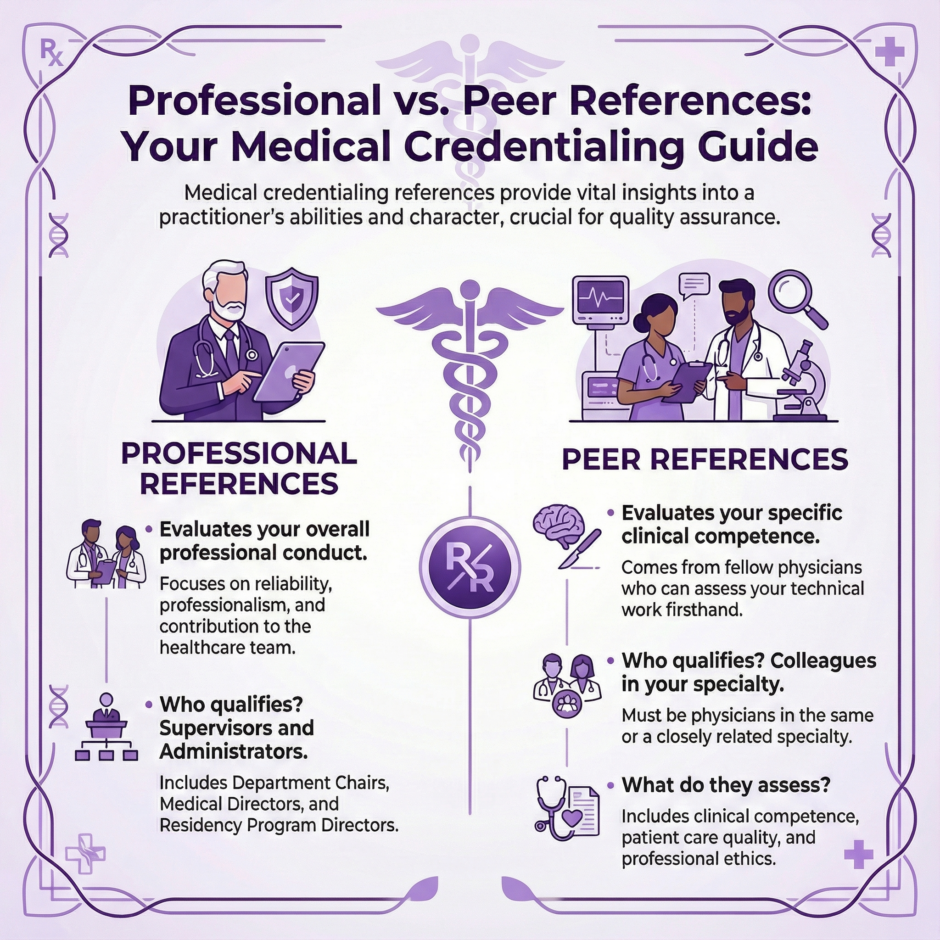
Professional references generally encompass a broader category of individuals who can speak to your work performance, including supervisors, department heads, medical directors, and other healthcare administrators who have observed your professional conduct. These references often focus on your reliability, professionalism, adherence to policies, and overall contribution to the healthcare team.
Peer references, on the other hand, come specifically from fellow physicians or other healthcare practitioners who work alongside you and can evaluate your clinical competence, medical knowledge, and patient care skills. These references carry particular weight because they come from individuals who understand the technical and clinical aspects of your work firsthand.
Who Qualifies as a Professional Reference?
The pool of potential professional references is broader than many physicians realize, but certain individuals carry more weight than others in the credentialing process. Department chairs and division chiefs represent the gold standard for professional references. These individuals typically have direct oversight of your clinical work and can provide comprehensive insights into your performance across multiple domains.
 Medical directors and chief medical officers also serve as excellent professional references, particularly if you’ve worked closely with them on quality improvement initiatives, committee work, or administrative projects. Their perspective on your leadership abilities and institutional citizenship can be invaluable.
Residency program directors and fellowship directors hold special significance, especially for physicians early in their careers. These individuals have observed your development over extended periods and can speak to your growth, adaptability, and potential. Their references often carry considerable weight because they’ve seen you handle increasing levels of responsibility and complexity.
Don’t overlook non-physician healthcare administrators who have worked closely with you. Hospital administrators, nursing directors, and department managers who can speak to your collaborative skills, professionalism, and contribution to patient care outcomes can provide valuable perspectives that complement clinical references.
For physicians in private practice, medical group partners, practice administrators, and clinic medical directors can serve as professional references. These individuals have knowledge of the unique challenges of private practice and can speak to your business acumen, patient management skills, and collaborative abilities.
Peer Reference Requirements
Peer references require particular attention because credentialing bodies typically have specific requirements about who qualifies. The most important criterion is that peer references must come from physicians in the same or closely related specialty who can meaningfully evaluate your clinical competence.

Board-certified physicians in your specialty represent the ideal peer references. These individuals get the nuances of your field and can provide credible assessments of your clinical skills, medical knowledge, and adherence to specialty-specific standards of care. When possible, choose peers who have observed your work directly, whether through shared call schedules, consultation relationships, or collaborative patient care.
Subspecialty colleagues can also serve as valuable peer references, particularly if you practice in a highly specialized area. A cardiologist seeking credentialing might benefit from references from both general cardiologists and interventional cardiologists, depending on their scope of practice.
Consider the tenure and reputation of your potential peer references. Established physicians with strong reputations in your community or institution lend credibility to your application. However, don’t discount younger colleagues who may have worked closely with you and can speak to your current practices and contemporary approaches to patient care.
For physicians in academic settings, research collaborators and co-investigators can provide unique perspectives on your analytical abilities, attention to detail, and commitment to evidence-based practice. These references can be particularly valuable if your credentialing involves research or teaching responsibilities.
Information Peer References Need to Provide
Knowing what information peer references need to provide helps you choose appropriate references and prepare them for the process. Most credentialing applications require peer references to complete detailed questionnaires that go far beyond simple character assessments.
 Clinical competence forms the cornerstone of peer reference evaluations. References typically need to assess your diagnostic abilities, treatment planning skills, technical proficiency with procedures, and overall medical knowledge. They may be asked to rate your performance on numerical scales or provide specific examples of your clinical decision-making.
Patient care quality represents another critical area of evaluation. Peer references often need to comment on your bedside manner, communication skills with patients and families, and ability to coordinate care with other healthcare team members. They may be asked about your response to patient complaints or difficult clinical situations.
Professional behavior and ethics receive significant attention in peer reference questionnaires. References may need to address your punctuality, reliability, response to feedback, and interactions with colleagues. Questions about substance abuse, criminal history, or ethical violations are standard components of these evaluations.
Scope of practice alignment is increasingly important in credentialing decisions. Peer references may need to confirm that your requested privileges align with your training, experience, and demonstrated competencies. This is particularly crucial for physicians seeking to expand their scope of practice or transfer to new specialties.
Quality improvement and patient safety involvement often feature in peer reference evaluations. References may be asked about your participation in quality initiatives, response to safety concerns, and commitment to continuous improvement in patient care.
The Reference Collection Process
Successfully gathering references requires strategic planning and clear communication. Start the process early, as obtaining comprehensive references can take several weeks or even months. Credentialing committees are often willing to wait for high-quality references rather than accept incomplete or rushed submissions.
When approaching potential references, provide them with complete information about the position you’re seeking and the institution’s requirements. Share your CV, a summary of your requested privileges, and any specific areas where you’d like them to focus their comments. This preparation helps references provide more targeted and useful information.
Be transparent about the credentialing timeline and any deadlines your references need to meet. Many busy physicians appreciate advance notice and clear expectations about the time commitment involved in providing a comprehensive reference.
Consider providing references with a brief summary of your work together, including specific projects, cases, or achievements they might highlight. While you shouldn’t coach references on what to say, helping them remember your collaboration can result in more detailed and specific feedback.
Common Reference Pitfalls to Avoid
Several common mistakes can undermine your reference strategy. Avoid choosing references based solely on their prestige or title if they don’t have meaningful knowledge of your work. A glowing reference from a department chair who barely knows you carries less weight than a detailed evaluation from a colleague who works with you regularly.
 Don’t rely too heavily on references from a single institution or time period. Credentialing committees prefer to see perspectives from multiple settings and different points in your career. This diversity demonstrates consistency in your performance across various environments.
Avoid asking references to comment on areas outside their expertise or observation. A surgical colleague may not be the best reference for your medical management skills, just as a medical peer might not be qualified to evaluate your procedural competence.
Be cautious about international references or those from institutions with different credentialing standards. While these references can provide valuable perspectives, ensure they know the specific requirements and standards of the credentialing body you’re applying to.
Preparing Your References for Success
Your references want to help you succeed, but they need your support to provide the most effective evaluations possible. Schedule brief meetings or phone calls with key references to discuss your application and answer any questions they might have about the process.
Provide references with relevant documentation, including your application materials, job descriptions, and information about the credentialing organization’s standards and expectations. This context helps them tailor their responses appropriately.
Keep references updated on your application status and any changes in timeline or requirements. If the credentialing process extends beyond initial expectations, check in with references to ensure their continued availability and engagement.
Consider providing references with examples of excellent reference letters or evaluation forms, if available. While each reference should reflect the individual’s genuine assessment, seeing examples of comprehensive evaluations can help references comprehened the level of detail and specificity that’s most helpful.
Summary: Professional and Peer References in Credentialing
Professional and peer references represent far more than a bureaucratic requirement in medical credentialing, they’re your opportunity to showcase the human side of your professional qualifications. The physicians and healthcare leaders who agree to serve as your references are essentially vouching for your character, competence, and commitment to excellent patient care.
 Approaching the reference process with the same diligence and attention to detail you bring to patient care will serve you well. Choose references who know your work intimately, can speak to your specific qualifications, and understand the gravity of their role in your professional future. Prepare them thoroughly, support them throughout the process, and maintain these valuable professional relationships long after your credentialing is complete.
Ultimately, credentialing is about patient safety and quality care. The references you provide should paint a clear picture of a physician who not only possesses the technical skills necessary for excellent patient care but also demonstrates the professionalism, integrity, and collaborative spirit that makes healthcare teams function effectively. When you approach references with this perspective, you’re not just completing an application requirement, you’re participating in healthcare’s essential quality assurance process.